

How to Attract the Right Investors for Your Startup in 2025
-
Home
-
Fundraising
-
How to Attract the Right Investors for Your Startup in 2025

How to Attract the Right Investors for Your Startup in 2025
Learn how to attract the right investors for your startup in 2025. Discover strategies to build alignment, position your startup for smart capital, and create investor relationships that truly add value.


Table of Content
-
Why Finding the Right Investors Matters More Than Ever
-
Define Who the “Right Investor” Really Is
-
Build Investor Magnetism Through Strategic Positioning
-
Communicate Value Through Aligned Storytelling
-
Establish Proof Before the Pitch
-
Activate the Right Channels and Networks
-
The Founder’s Role in Shaping the Investor Relationship
-
Join the Smart Fundraising Movement
-
Frequently Asked Questions

Why Finding the Right Investors Matters More Than Ever
The startup world in 2025 is more capitalized than ever before. Angel groups, syndicates, micro-VCs, family offices, global venture networks, and even AI-driven deal flow platforms have made money more available. But availability isn’t the problem—alignment is.
Attracting the right investor is no longer optional. In today’s volatile markets, the people funding your startup can either fuel your growth or quietly sabotage your momentum. The wrong investor can pull you in the wrong direction, force inorganic growth, pressure short-term exits, or create friction in your leadership decisions. Founders in 2025 must treat investor selection as carefully as they would a co-founder hire.
The truth is: not every cheque is good for your startup. It’s not about who will invest—it’s about who should invest. The right investors bring capital plus clarity, connection, and conviction. They believe in your vision, understand your market, and support your path—even when things get messy.
In this guide, we’ll explore how to attract investors who are truly right for your startup. Not just financially, but strategically, philosophically, and relationally. These are the investors who don’t just back your company—they back your mission.
Define Who the “Right Investor” Really Is

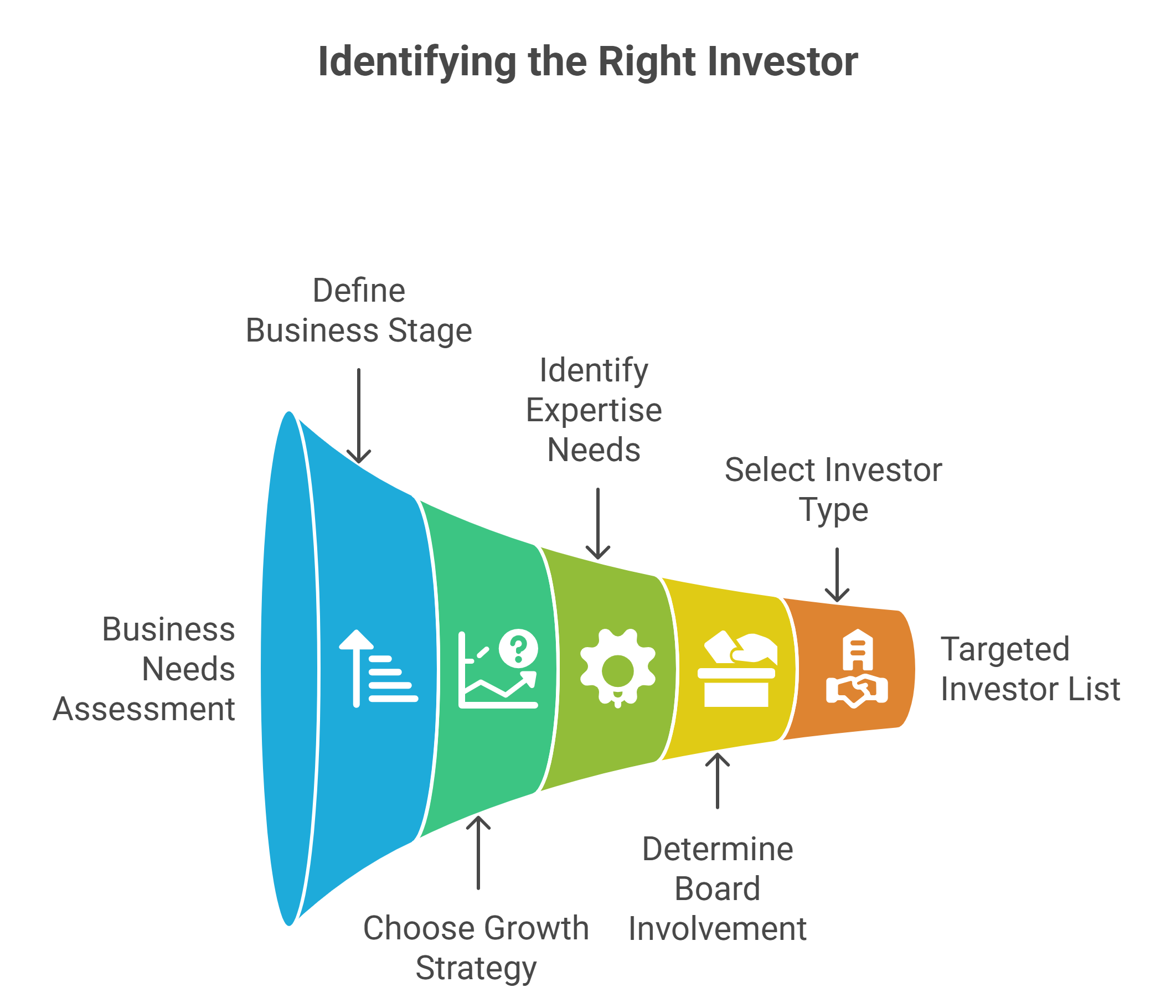
Before you attract the right investor, you need to define who that is for your business.
Most founders make the mistake of chasing investors based on brand name, fund size, or fame. But these factors mean little if the investor doesn’t resonate with your product stage, customer segment, or growth philosophy.
Start with clarity on your needs. Ask yourself:
- What stage are we in, and what support do we need at this stage?
- Are we building a long-term sustainable business, or aiming for aggressive scale?
- Do we need technical expertise, industry access, or global expansion knowledge?
- Are we okay with board involvement or prefer a more hands-off approach?
- Do we want someone with deep conviction in our space, or generalist VCs?
The right investor for a B2B SaaS with long sales cycles is likely very different from one ideal for a viral consumer product. Similarly, early-stage deep tech startups need patient capital—someone who understands R&D cycles and doesn’t expect immediate market traction.
This self-assessment is not just a thought exercise. It becomes the foundation for your investor targeting strategy. Clarity here saves you from months of mismatched conversations and future tension.
Define your ideal investor before you meet them. Because the right investor is looking for the right founder, too.
Build Investor Magnetism Through Strategic Positioning

In 2025, you don't chase investors—they find you. But for that to happen, you need to be visible, credible, and valuable in the right spaces.
Think of your startup’s positioning like a signal. Are you broadcasting what aligned investors are scanning for?
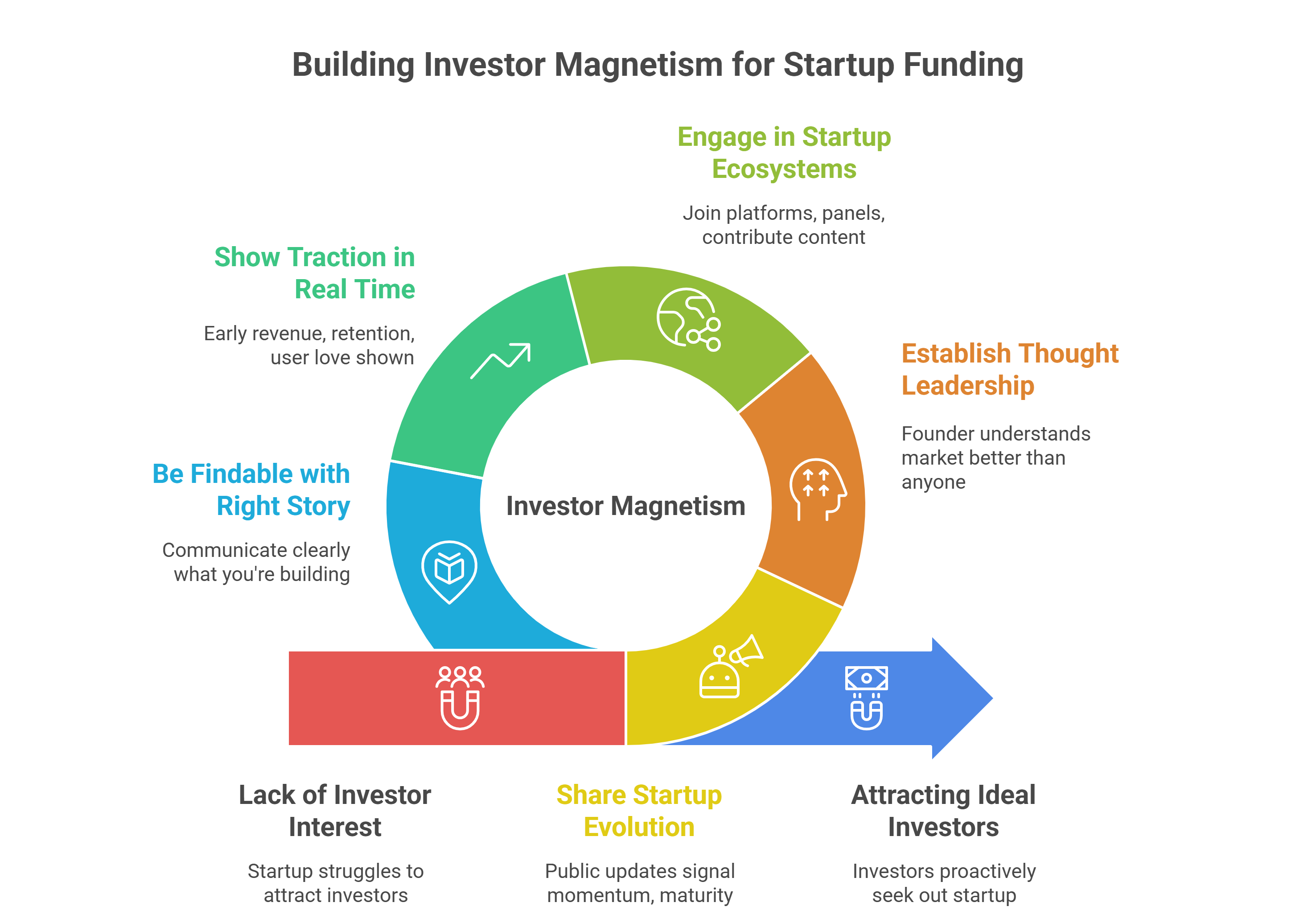
Here’s how to build investor magnetism:
- Publicly share your startup’s evolution: Regular updates on product launches, traction, hiring, or learnings signal momentum and maturity.
- Establish thought leadership: Write or speak about your space. Become the founder who understands the market better than anyone else.
- Engage in startup and VC ecosystems: Join curated founder-investor platforms, appear on panels, and contribute to newsletters or podcasts.
- Show traction in real time: Investors follow traction before they fund it. Early signs of revenue, retention, or user love help you stand out.
- Be findable with the right story: Your LinkedIn, company site, and pitch collateral should communicate what you’re building and why it matters.
Positioning isn’t about being flashy. It’s about being discoverable and credible to the people who are already looking to fund startups like yours. Magnetism is a function of clarity and visibility, not luck.
In 2025, positioning is your pull strategy. Done right, it brings the right investors to your inbox before you ever send a cold pitch.
Communicate Value Through Aligned Storytelling

Fundraising is about narrative alignment. Investors invest in stories they believe in, told by founders they trust. But to attract the right investor, your story needs to resonate on a deeper level—not just with numbers, but with mission, insight, and clarity.
Every story needs four elements:
- The “Why now” factor
Why is this the moment your company must exist? Market trends? User behavior shifts? Technology tipping points?
- The founder-market fit
Why you? What insight, obsession, or experience gives you an unfair advantage in solving this problem?
- The traction proof
What real-world signals show that customers care? Revenue, retention, growth, or qualitative engagement?
- The long-term vision
Where are you headed—and what kind of investor journey does that imply?
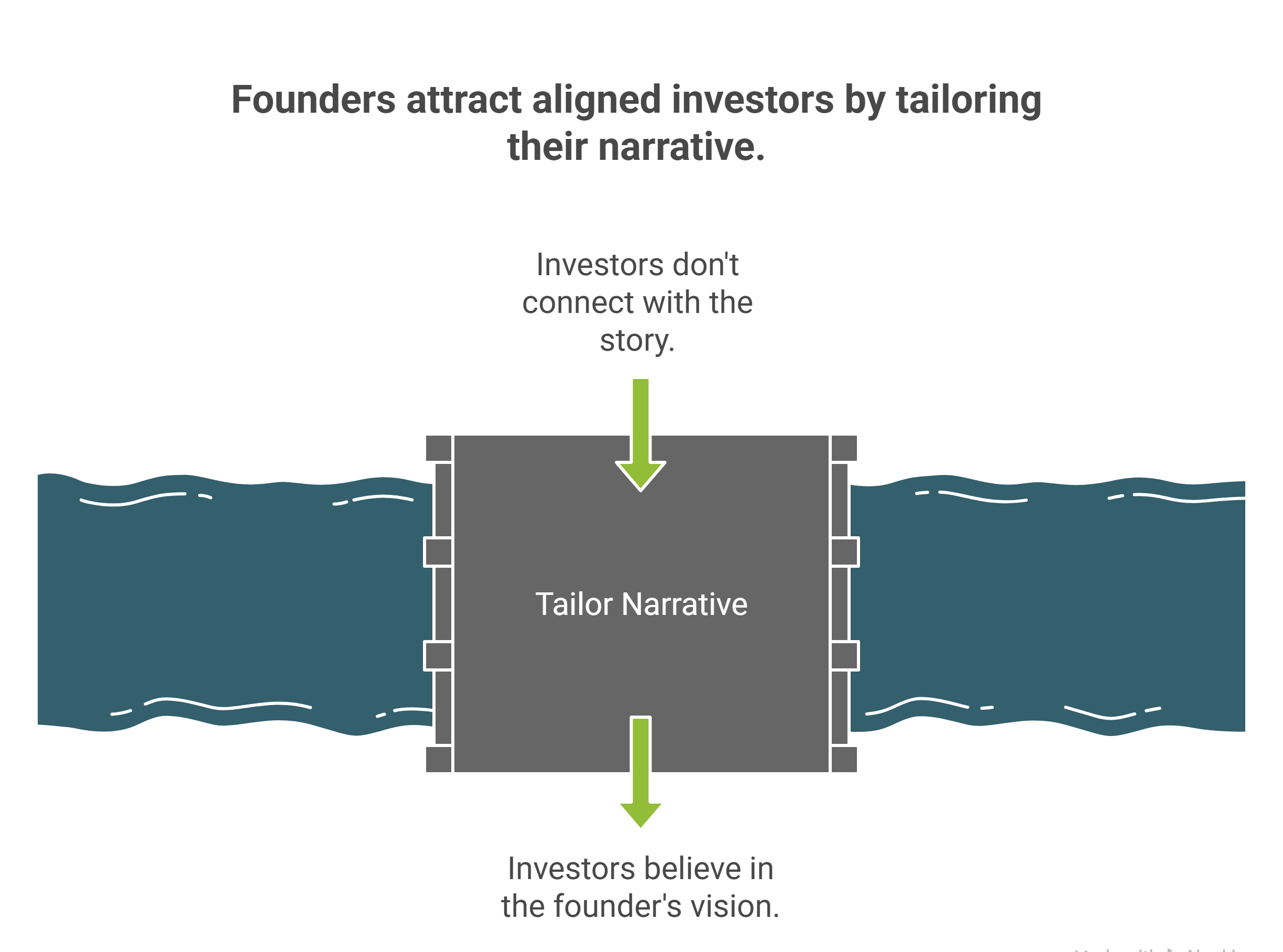
But the best founders go one step further. They tailor this story to the kind of investor they’re speaking to. A mission-driven impact fund might care more about your sustainability metrics. A fintech VC may want to see a regulatory strategy and embedded finance layers. A solo capitalist might want to back visionary founders before traction.
Tailoring your story doesn’t mean changing your truth. It means packaging your truth in a way that clicks with the right listener.
Storytelling isn’t a slide deck skill. It’s a leadership skill—and in 2025, it’s the ultimate filter for attracting aligned investors.
Establish Proof Before the Pitch

By the time you speak to an investor, they’ve already Googled you, read your tweets, and analyzed your metrics. First impressions happen before the meeting. That’s why proof precedes persuasion.
In a noisy ecosystem, the best way to attract the right investors is by demonstrating real momentum before you ever ask for money.
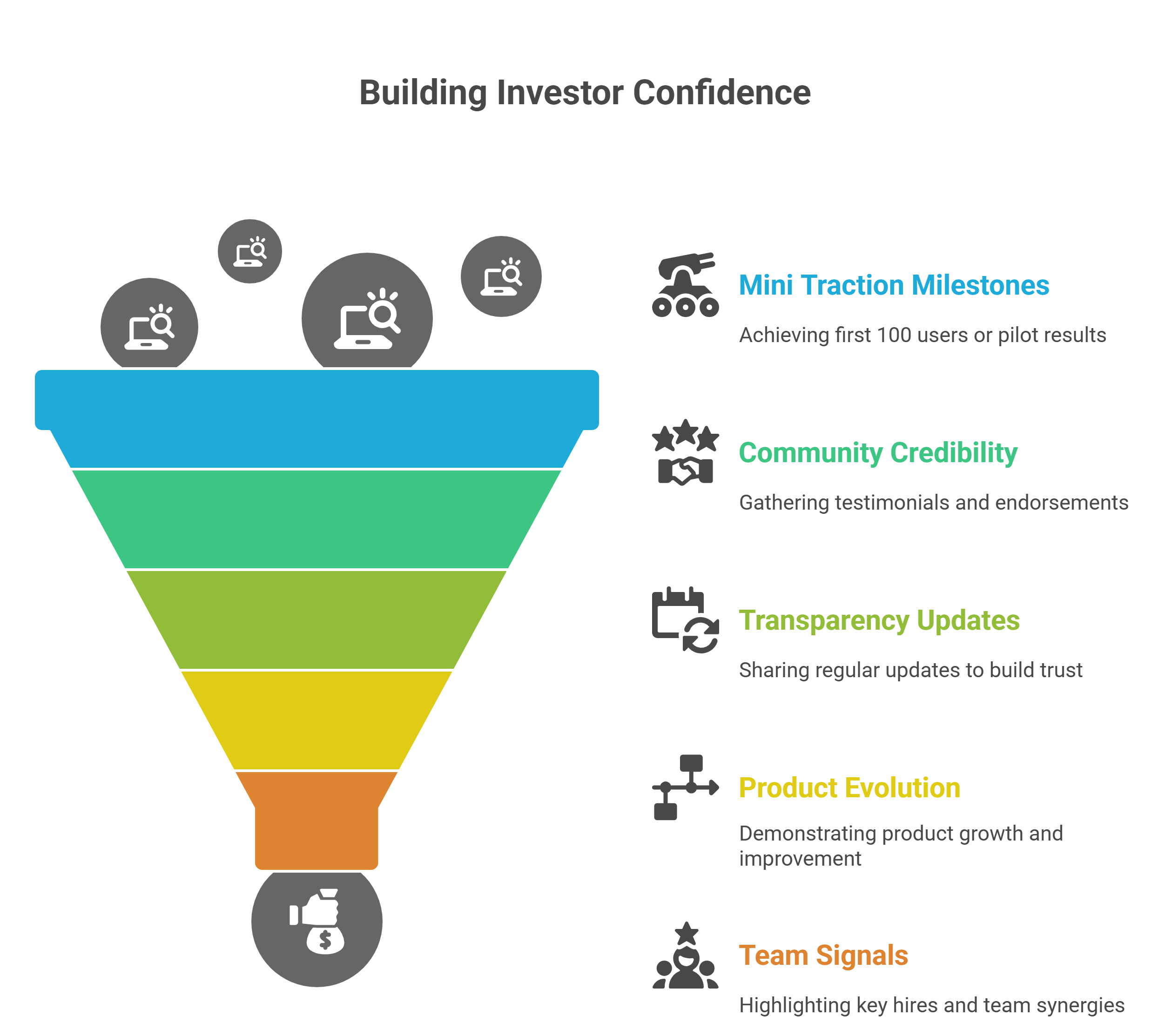
Founders in 2025 are building proof through:
- Mini traction milestones: First 100 paying users, customer retention stats, or meaningful pilot results.
- Community credibility: Testimonials from customers, advisors, or peers that validate your team and product.
- Transparency through founder updates: Monthly or quarterly updates, even to non-investors, signal discipline and trustworthiness.
- Product evolution: A strong “before and after” in your product journey shows execution muscle.
- Team signals: Key hires, co-founder synergies, or talent joining from high-quality companies is a major credibility boost.
The right investors want to back teams who ship, iterate, and grow with or without external capital. They don’t invest because you need the money—they invest because you’ve built something they believe can scale.
Build the proof. Let it precede your pitch. The best investors won’t need convincing—they’ll want to be part of it.
Activate the Right Channels and Networks

No matter how good your product or pitch is, you still need to connect with the right people. In 2025, cold outreach works—but warm networks win.
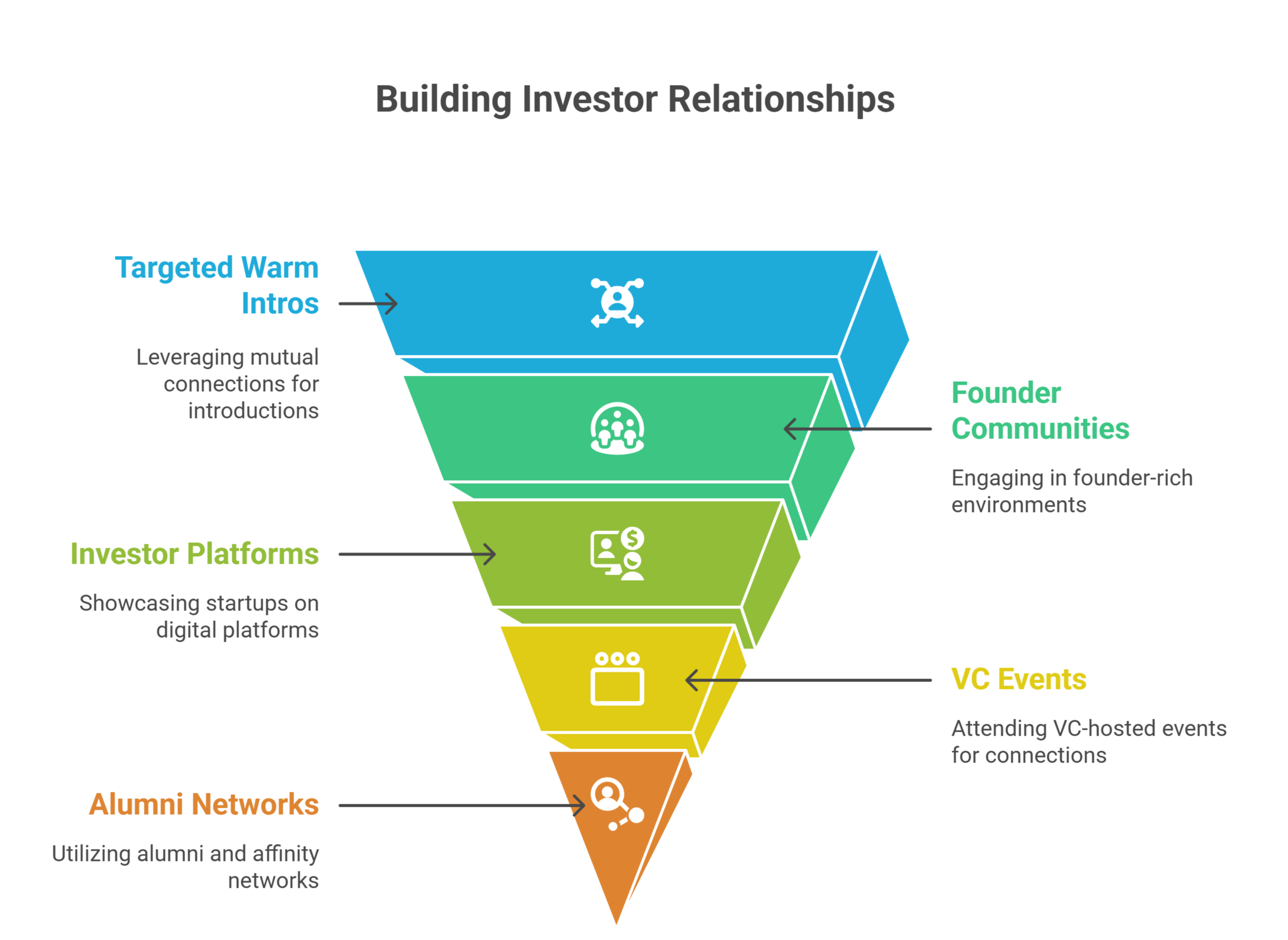
Founders attracting aligned investors are leveraging:
- Targeted warm intros: Use mutual connections to request learning conversations, rather than making immediate requests.
- Founder communities: Groups like On Deck, AngelList, or regional founder circles are often investor-rich environments.
- Investor platforms: From SeedScout to Stonks, new digital platforms let you showcase startups to qualified angels and VCs.
- VC-hosted roundtables and office hours: Many firms host AMA sessions or invite-only pitch events—attend them not to pitch, but to connect.
- Alumni and affinity networks: Your university, past employer, or industry circles may have private investment arms or angel syndicates.
The right investors don’t just fund—they follow. You need to show up in their world in non-transactional ways. Engage before you pitch. Share insights, ask questions, add value.
Fundraising isn’t a cold email campaign. It’s an ecosystem play. When you show up consistently and authentically in the right networks, the right investors will notice.
The Founder’s Role in Shaping the Investor Relationship

Attracting the right investors isn’t just about who they are—it’s about who you are in the relationship.
In 2025, investors are looking for founders who are not only visionary but also coachable, transparent, and mission-aligned. The most successful founders treat investors like strategic partners, not banks.
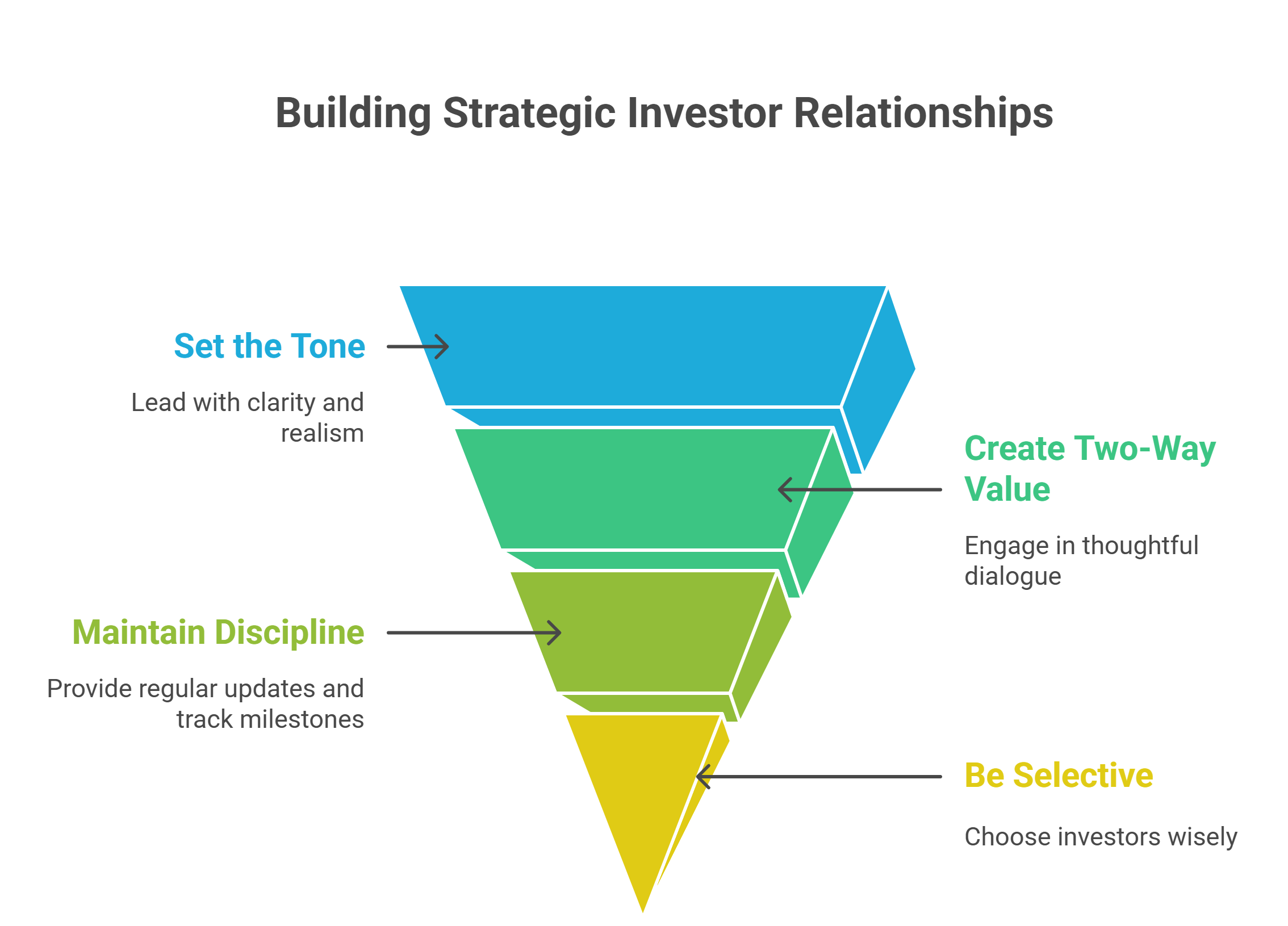
Your role as a founder includes:
- Setting the tone: You lead with clarity, confidence, and realism, not hype.
- Creating two-way value: Ask thoughtful questions, seek insights, and stay open to challenge.
- Maintaining post-investment discipline: Monthly updates, milestone tracking, and open comms build long-term trust.
- Being selective: Just like they choose you, you must choose them, and be ready to walk away from misalignment.
The founder-investor dynamic is more like a marriage than a transaction. The people you raise from today could be on your board for the next 7–10 years. Attracting the right investor means being the kind of founder they want to work with and having the discernment to choose wisely.
Join the Smart Fundraising Movement

Attracting the right investors is not a lottery—it’s a learned skill.
If you’re tired of cold pitches and mismatched conversations and ready to learn how to fundraise with clarity, confidence, and strategy, the "Raise Smart: Fundraising for Founders 2025+" course is designed for you.
In this course, you’ll learn:
- How to build a startup that attracts capital organically
- How to craft a narrative that aligns with the right kind of investor
- How to leverage networks, not just pitch decks
- How to stay in control of your vision while raising
- How to avoid red flags and dilution traps
Stop chasing capital. Start attracting the right investors.
Raise smarter. Raise right. Enroll today.
Frequently Asked Questions
- What makes an investor “right” for a startup?
The right investor aligns with your stage, industry, vision, and growth timeline. They add value beyond money and understand your specific journey.
- Can early-stage startups attract high-quality investors?
Yes. If you show clarity, traction, and commitment, great investors will back even early concepts—especially when you’ve built relationships and proof early on.
- What if I don’t have a network of investors?
You can start building one through founder communities, accelerators, events, and by giving value before asking for meetings. Warm intros are powerful—but positioning comes first.
- How important is a pitch deck in attracting investors?
It’s important—but not primary. In 2025, your online presence, traction, and story matter more than the deck. A great deck supports momentum—it doesn’t create it.
Should I turn down investors if they offer capital but don’t align?
Absolutely. Mismatched investors can hurt more than help. Always prioritize alignment over funding speed.
Written By
Critical Legal Writer Intern at BISJHINTUS, English Honours (Gold Medalist) / LL.B.

Designed By
UI/UX Designer at BISJHINTUS

Share this post:
Leave a comment
Your email address will not be published. Required fields are marked *
Write a Review
Related Posts

Discover the differences between equity and debt financing for startups in 2025. Learn how to choose...

Discover the 5 fundraising secrets every founder must know in 2025 and beyond. Learn how to attract...
