

Comparison Between Equity and Debt Financing for Startups in 2025
-
Home
-
Fundraising
-
Comparison Between Equity and Debt Financing for Startups in 2025

Comparison Between Equity and Debt Financing for Startups in 2025
Discover the differences between equity and debt financing for startups in 2025. Learn how to choose the right funding model to grow your business without compromising your vision.


Table of Content
-
The Modern Funding Dilemma: Choosing the Right Path
-
Understanding Equity Financing: What You Gain and What You Give
-
Exploring Debt Financing: A Tool for Growth with Strings Attached
-
Key Factors That Differentiate Equity vs. Debt in 2025
-
When to Choose Equity and When to Choose Debt
-
The Hybrid Approach: Can You Combine Both in 2025?
-
Funding Decisions That Shape Startup Futures
-
Ready to Raise Smart? Learn the Right Way
-
Frequently Asked Questions

The Modern Funding Dilemma: Choosing the Right Path
For startup founders in 2025, funding is more accessible than ever—but the decision on how to fund your business has never been more complex. With the rise of alternative financing tools, new-age venture models, and data-driven lending, you’re no longer confined to one path. But more choice brings more responsibility.
The two most foundational funding models—equity financing and debt financing—represent distinct philosophies. One offers capital in exchange for ownership and strategic partnership. The other gives you money now, expecting repayment later, usually with interest but without taking a slice of your company.
Too many founders default to one over the other without understanding the long-term implications. But in 2025, this choice is no longer just a financial decision—it’s a strategic one. It determines who controls your future, how quickly you must grow, what risks you're taking on, and how much flexibility you retain as a founder.
This article breaks down the modern realities of equity and debt financing for startups in 2025. Whether you’re at pre-seed or growth stage, bootstrapped or backed, tech-focused or service-led—knowing which funding route fits your vision is non-negotiable.
Understanding Equity Financing: What You Gain and What You Give

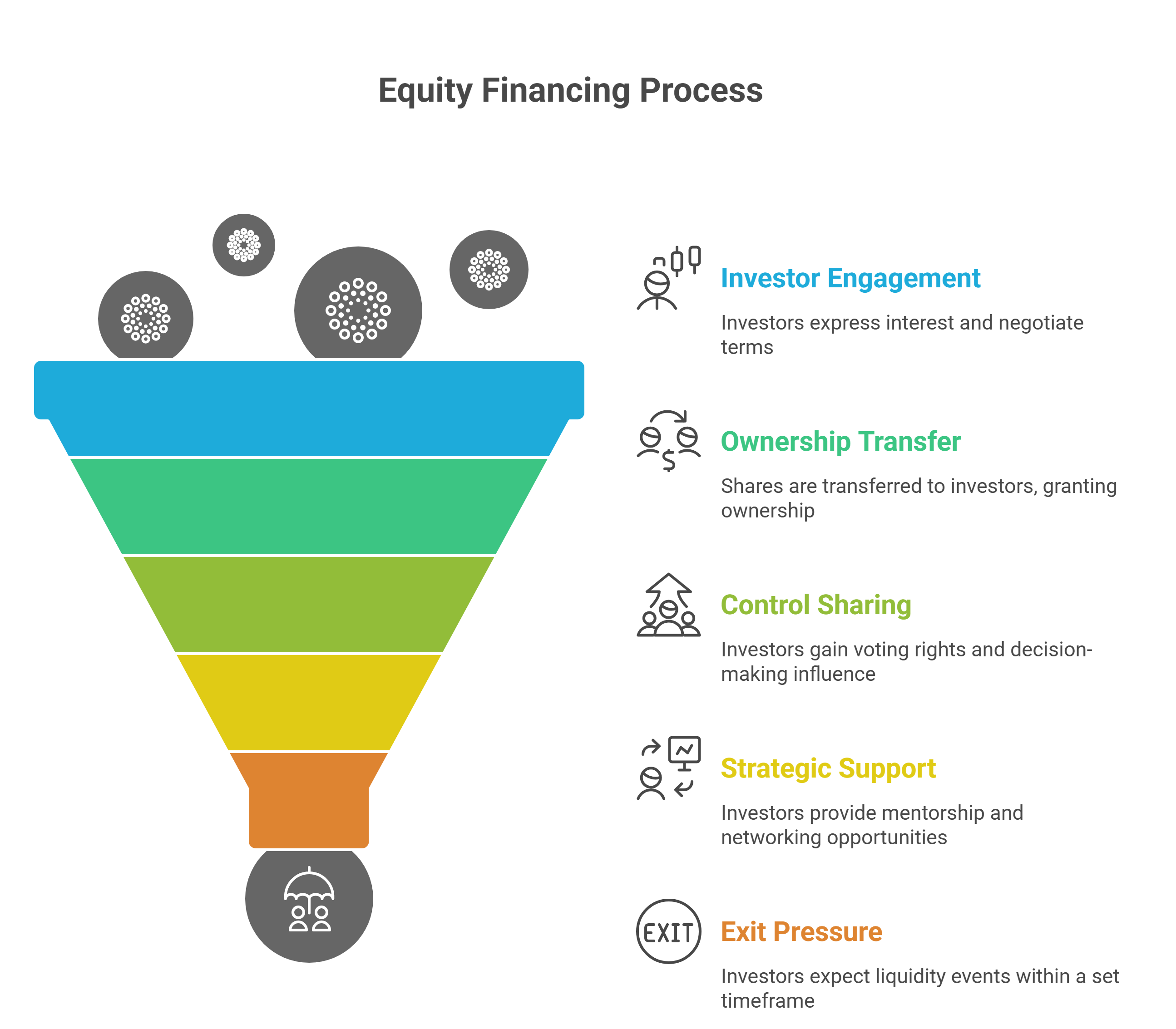
Equity financing means raising money by selling shares of your company to investors. These investors can be angel investors, venture capitalists, syndicates, accelerators, or even crowdfunding participants. In return, they get ownership in your company, voting rights in many cases, and a seat at the decision-making table.
In 2025, equity is still the dominant funding path for early-stage startups. It offers non-repayable capital—there’s no debt burden or interest. But it also means giving up a percentage of ownership, and often, some control.
Key Benefits of Equity Financing:
- No repayment required: If the company fails, you’re not personally liable.
- Access to strategic support: Investors bring mentorship, networks, and future fundraising help.
- Better for high-risk ventures: If your startup has long timelines or heavy R&D, equity buys you time.
- Signals market validation: Well-known investors can boost credibility and attract talent.
Challenges and Considerations:
- Dilution: You lose ownership with every round raised.
- Loss of control: Investors may seek board seats or veto power on major decisions.
- Exit pressure: Many equity investors expect liquidity events (IPO, acquisition) within 5–10 years.
- Valuation dependency: If you raise at a high valuation but underperform, future rounds may suffer.
Equity financing is about partnership and long-term alignment. But once you give up a slice of your company, you rarely get it back. Choose wisely—especially in your first few rounds.
Exploring Debt Financing: A Tool for Growth with Strings Attached

Debt financing refers to borrowing money that you must repay over time with interest. This can come from banks, revenue-based lenders, venture debt firms, or private credit funds. Unlike equity, debt doesn’t dilute your ownership, and repayment schedules are usually clear from the outset.
In 2025, debt has evolved from being a conservative afterthought to a strategic capital option, especially for startups with predictable cash flow, high gross margins, or short sales cycles.
Key Benefits of Debt Financing:
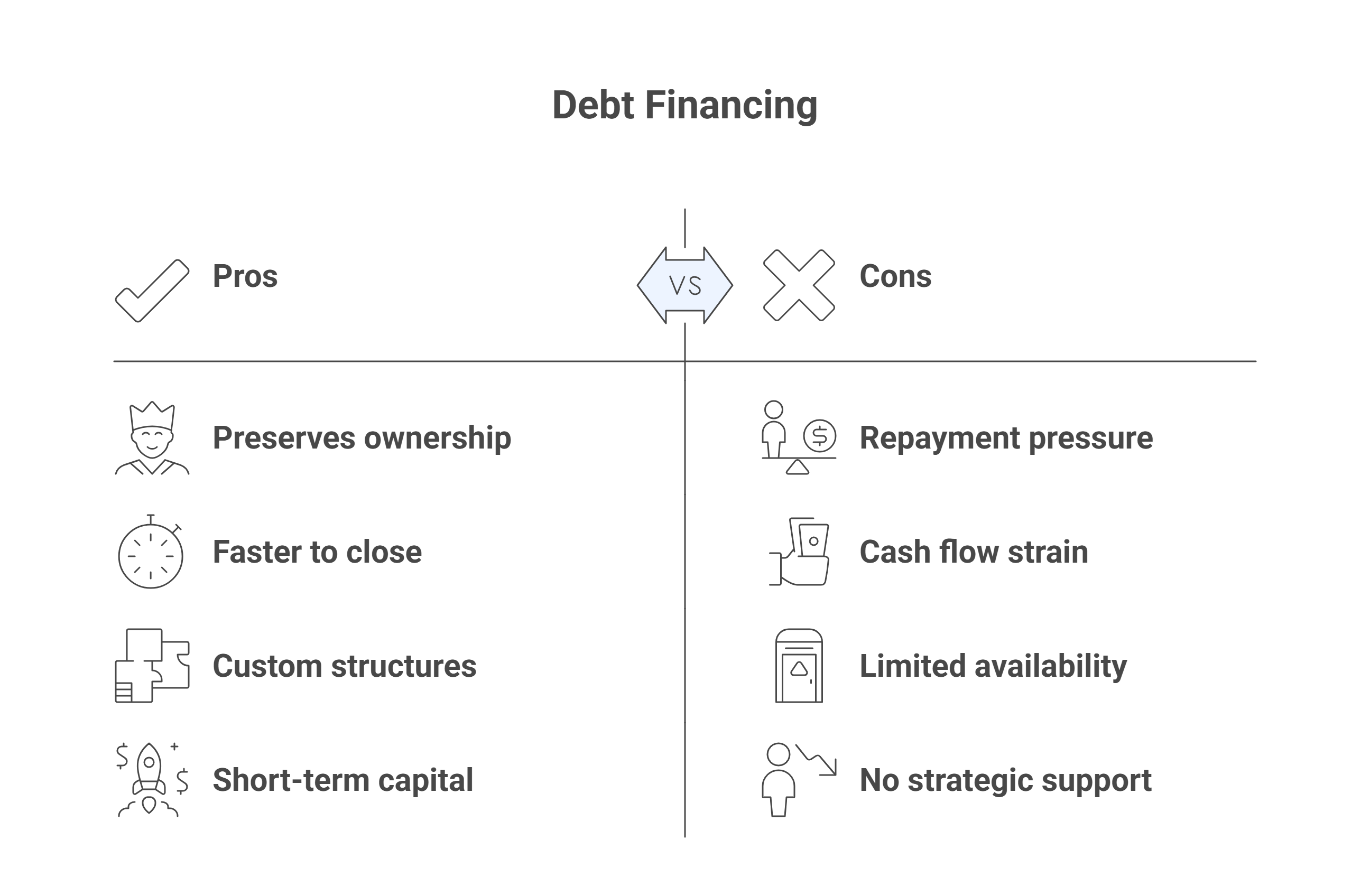
- Preserves ownership: No dilution means founders stay in control.
- Faster to close: Debt deals often involve fewer negotiations than equity rounds.
- Custom structures: Interest-only periods, balloon payments, and revenue-based repayments give more flexibility.
- Short-term capital injection: Ideal for growth initiatives, inventory, or marketing campaigns.
Risks and Challenges:
- Repayment pressure: Missed payments can harm credit, limit future funding, or lead to default.
- Cash flow strain: If revenue drops, repayment can hurt your runway.
- Limited availability at early stage: Most lenders prefer startups with traction, not ideas.
- No strategic support: Lenders don’t provide mentorship or networks.
Debt is best used as a fuel for growth, not as a lifeline. When managed carefully, it can turbocharge your startup without compromising control—but misused, it can create deadly pressure when markets shift or revenue dips.
Key Factors That Differentiate Equity vs. Debt in 2025

While both equity and debt inject capital into your business, their core implications vary significantly. In 2025, the decision isn’t just about short-term cash—it’s about long-term sustainability and founder freedom.
Here’s a breakdown of core differences:
1. Control vs. Repayment
- Equity: Gives up partial control and decision-making power.
- Debt: Keeps control but requires fixed repayments, often regardless of performance.
2. Dilution vs. Leverage
- Equity: Dilutes your ownership over time with each round.
- Debt: No dilution, but introduces leverage and interest burden.
3. Time Horizon
- Equity: Best for long-term plays with uncertain cash flow.
- Debt: Ideal for short-term capital needs where ROI is visible.
4. Stage Suitability
- Equity: Preferred in early stages where valuation and proof are still forming.
- Debt: Preferred post-traction when there’s cash flow to service loans.
5. Investor Involvement
- Equity: Comes with strategic guidance, board seats, and expectations of influence.
- Debt: Minimal to no involvement—purely transactional.
In 2025, investors and lenders alike expect smarter founders. That means knowing which model fits your business DNA, and being transparent about the risks and rewards on both sides.

When to Choose Equity and When to Choose Debt

There’s no universal answer, but certain scenarios favor one over the other. Here's how to make a strategic choice in 2025:
Opt for Equity if:
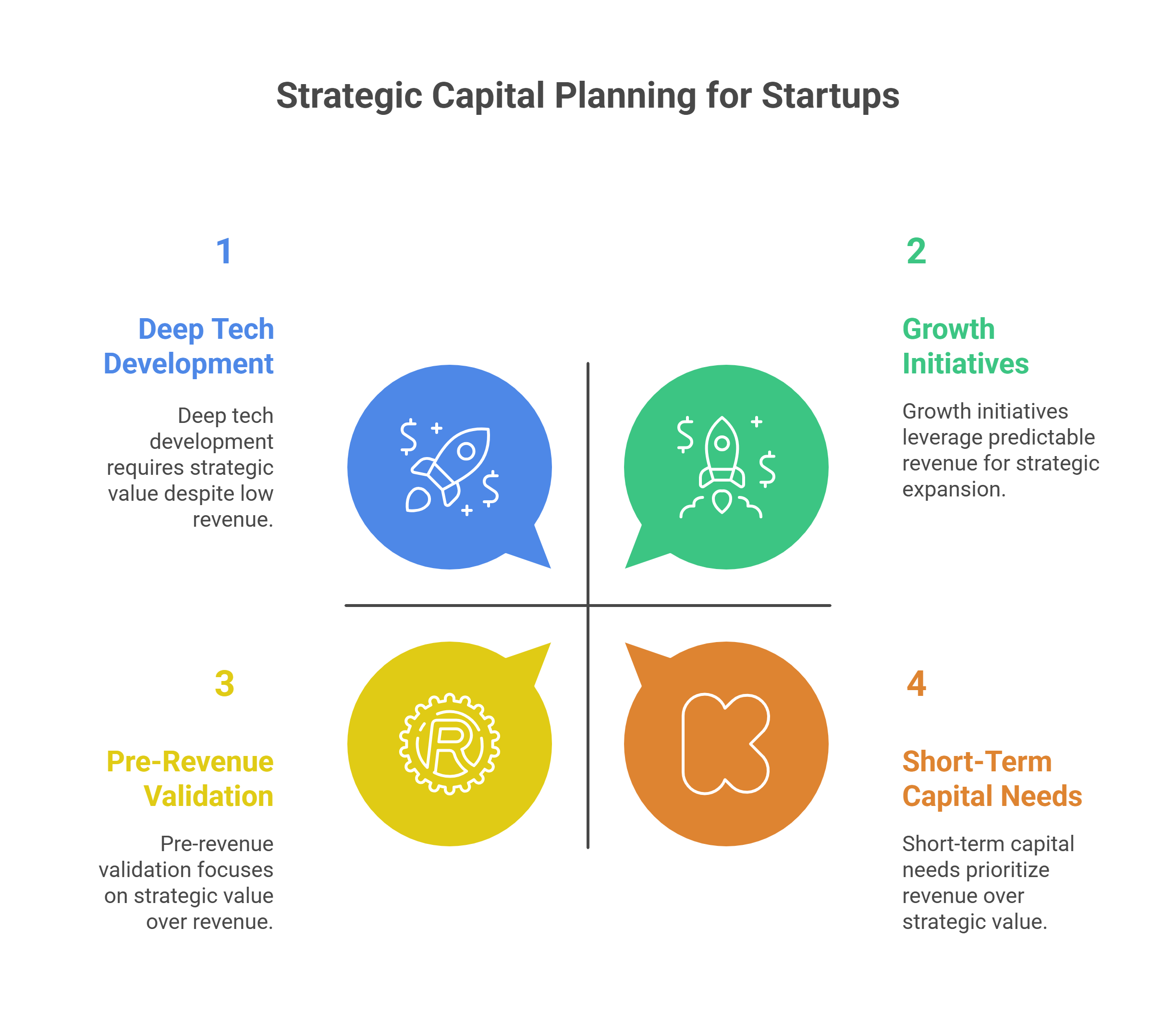
- You’re pre-revenue or still validating product-market fit.
- You’re building deep tech or long-R&D products.
- You value mentorship, network access, and market credibility.
- Your business model has massive scale potential but long timelines.
- You’re preparing for future funding rounds and want top-tier VC backing.
Opt for Debt if:
- You have strong, predictable revenue with high margins.
- You need capital for growth initiatives (marketing, expansion, hiring).
- You want to avoid dilution and retain founder control.
- You need short-term capital quickly without giving up board seats.
- You’re confident in your cash flow to handle repayments.
2025 is about strategic capital planning—not just raising money, but understanding when and why. Founders who think beyond the next 12 months always win.
The Hybrid Approach: Can You Combine Both in 2025?

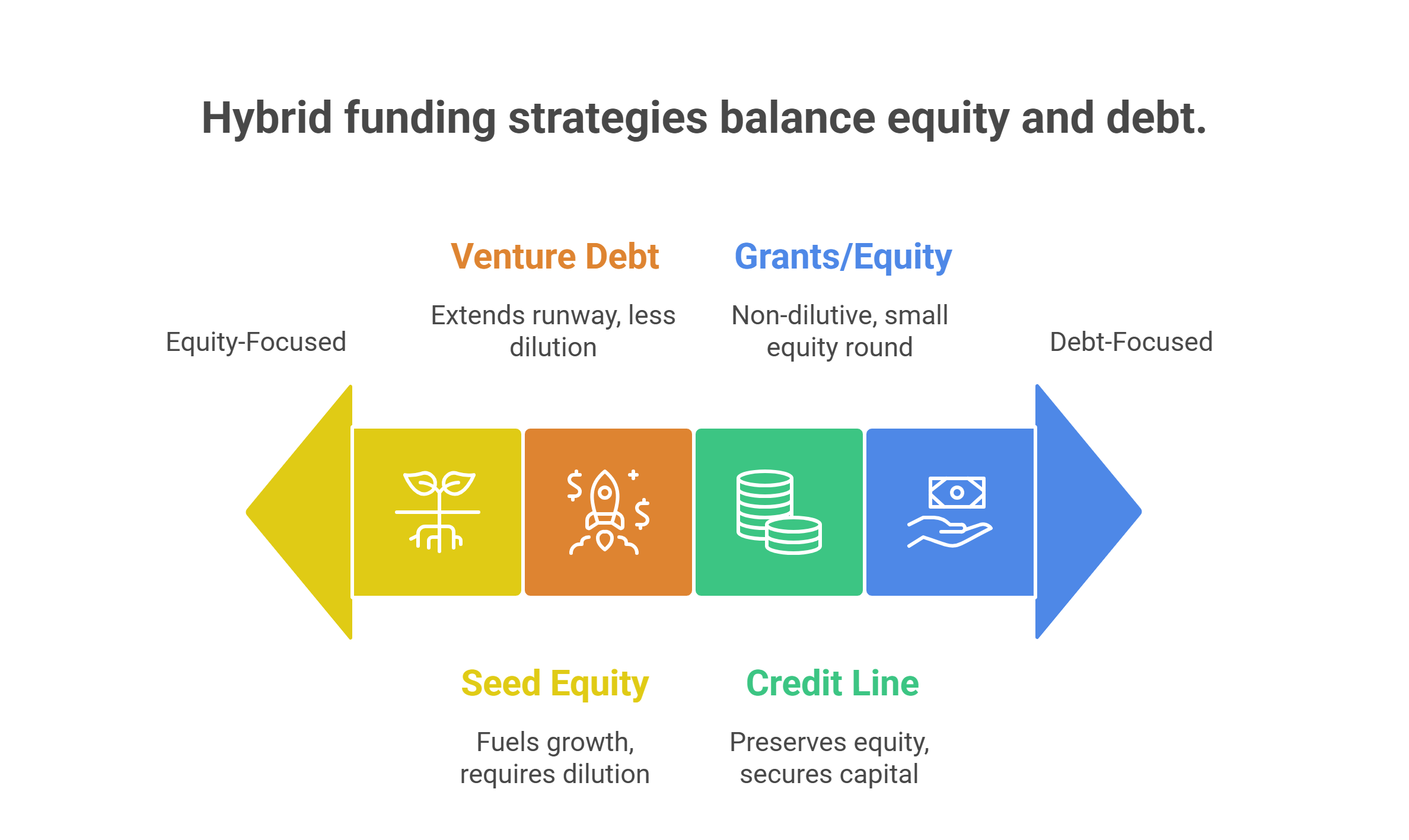
More founders in 2025 are exploring a hybrid funding approach—raising equity to fuel foundational growth, then layering in debt to scale efficiently. Used correctly, this method offers flexibility, control, and speed.
Common hybrid strategies include:
- Raise seed equity, then revenue-based debt for marketing
- Use venture debt post-Series A to extend runway without dilution
- Secure a credit line against recurring revenue while preserving equity
- Mix grants or non-dilutive capital with a small equity round
This hybrid approach requires financial discipline. You’ll need to manage debt responsibly while still communicating equity strategy clearly to investors.
If you can do both well, your startup becomes capital efficient, agile, and resilient—ready for whatever the market throws at you.
Funding Decisions That Shape Startup Futures

In the evolving startup ecosystem of 2025, your funding choices are no longer one-size-fits-all. Whether you choose equity, debt, or a hybrid model, the key is intentionality.
Founders who raise reactively often regret it later. But those who align funding choices with company goals, cash flow patterns, and founder values tend to build stronger, more sustainable startups.
Ask yourself:
- What kind of control am I willing to give up?
- Can my business service debt comfortably?
- Am I raising to survive, or to strategically scale?
- Is this funding decision aligned with where I want to be 3 years from now?
The money is out there. But not all of it is meant for you. Choose the model that supports your mission—not just your milestone.
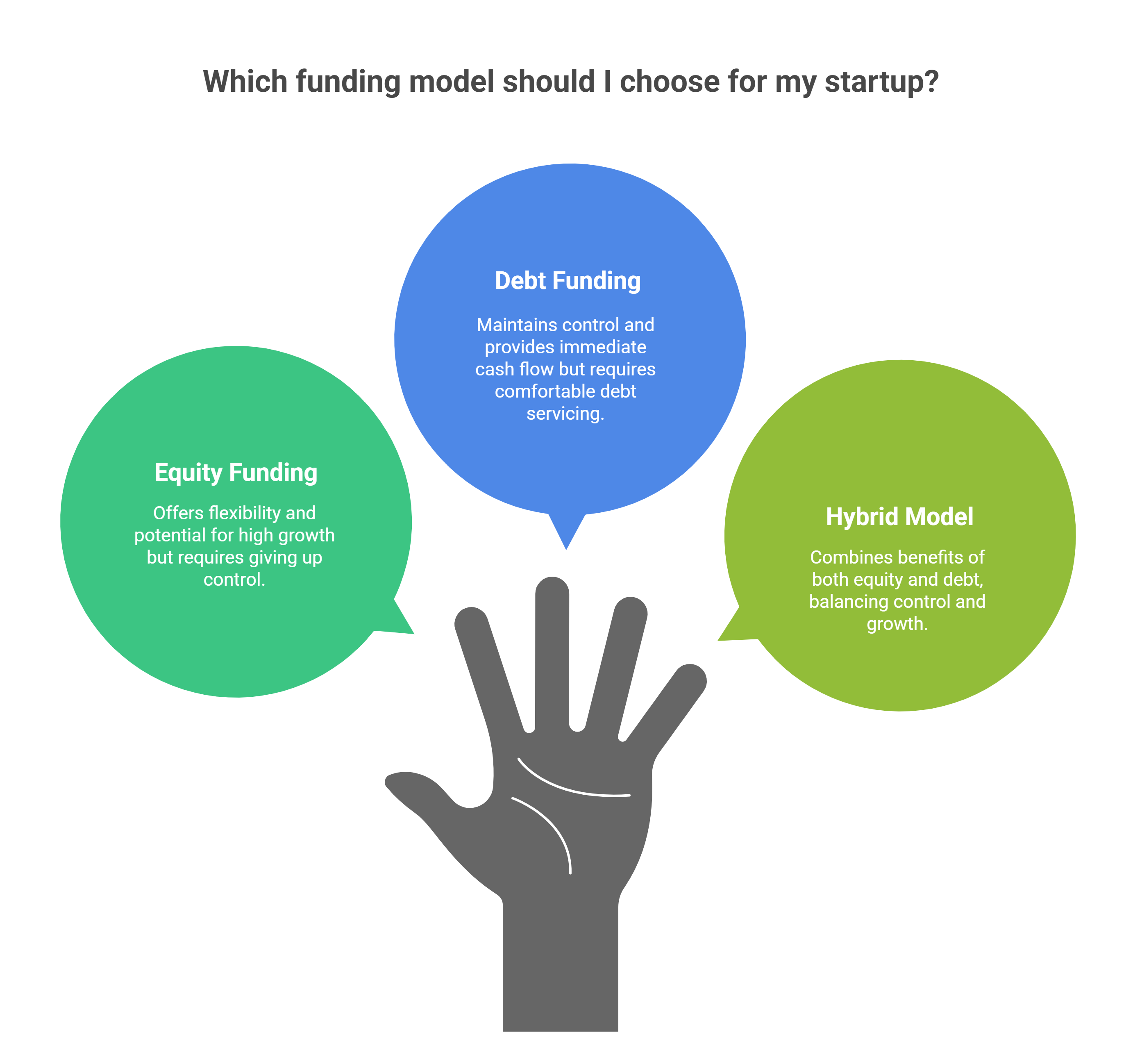
Ready to Raise Smart? Learn the Right Way

If you’re ready to go beyond hype-driven fundraising and make truly informed, confident capital decisions, join our course:
“Raise Smart: Fundraising for Founders 2025+”
Inside, you’ll learn:
- How to navigate equity and debt without confusion
- How to prepare your company for both types of investors
- How to choose capital partners based on alignment, not desperation
- How to raise on your timeline, without giving up unnecessary control
- How to protect your cap table while fueling fast growth
We’ll help you stop chasing the wrong capital—and start raising with clarity, strategy, and purpose.
Start your smart fundraising journey today.
Frequently Asked Questions
- Is equity or debt better for early-stage startups?
Equity is generally better for early-stage startups due to the lack of cash flow and high risk. However, revenue-based debt can be viable for bootstrapped businesses with traction.
- Can I switch from equity to debt later on?
Yes. Many startups raise equity first and use debt later for expansion. The reverse is less common, but possible if your business model supports it.
- Will taking debt hurt my chances of future equity funding?
Not necessarily. If managed well, debt shows financial discipline. However, excessive or poorly structured debt can raise red flags for future investors.
- Are there alternative funding options beyond equity and debt?
Yes—grants, crowdfunding, convertible notes, and SAFE agreements offer various structures. But most boil down to some form of equity or debt in the long run.
What if I regret an early funding decision?
Many founders do. But it's never too late to course-correct. The key is to reassess, communicate with stakeholders, and adjust future funding strategies accordingly.
Written By
Critical Legal Writer Intern at BISJHINTUS, English Honours (Gold Medalist) / LL.B.

Designed By
UI/UX Designer at BISJHINTUS

Share this post:
Leave a comment
Your email address will not be published. Required fields are marked *
Write a Review
Related Posts

Learn how to attract the right investors for your startup in 2025. Discover strategies to build alig...

Discover the 5 fundraising secrets every founder must know in 2025 and beyond. Learn how to attract...
