

7 High-Demand Cybersecurity Jobs in 2025
-
Home
-
Cybersecurity
-
7 High-Demand Cybersecurity Jobs in 2025

7 High-Demand Cybersecurity Jobs in 2025
Explore 7 high-demand cybersecurity jobs in 2025 and learn how the Bisjhintus Cybersecurity Course can launch your career in digital defense.


Table of Content
-
Introduction: Why Cybersecurity Jobs Are Booming in 2025
-
Cybersecurity Analyst
-
Ethical Hacker (Penetration Tester)
-
Cloud Security Engineer
-
Security Software Developer
-
Network Security Engineer
-
Incident Response Manager
-
Chief Information Security Officer (CISO)
-
Why Choose a Cybersecurity Career in 2025?
-
How Our Cybersecurity Course at Bisjhintus Prepares You
-
FAQs
-
Conclusion

Why Cybersecurity Jobs Are Booming in 2025
In 2025, cybersecurity isn't just a tech concern; it's a business imperative. With cyberattacks becoming more frequent and sophisticated, global demand for cybersecurity professionals is surging. Whether it’s ransomware crippling city infrastructure or data breaches leaking millions of users’ private information, every sector from healthcare to finance is seeking digital defenders.
According to recent industry reports, the global cybersecurity job market is projected to grow at an 11% compound annual growth rate (CAGR), with over 3.5 million job vacancies expected by the end of the year. This surge presents a massive opportunity for both aspiring IT professionals and career switchers.
If you're wondering where to start or what role suits you best, this guide explores 7 high-demand cybersecurity jobs in 2025, what they entail, and how you can break into them, even with no prior experience.
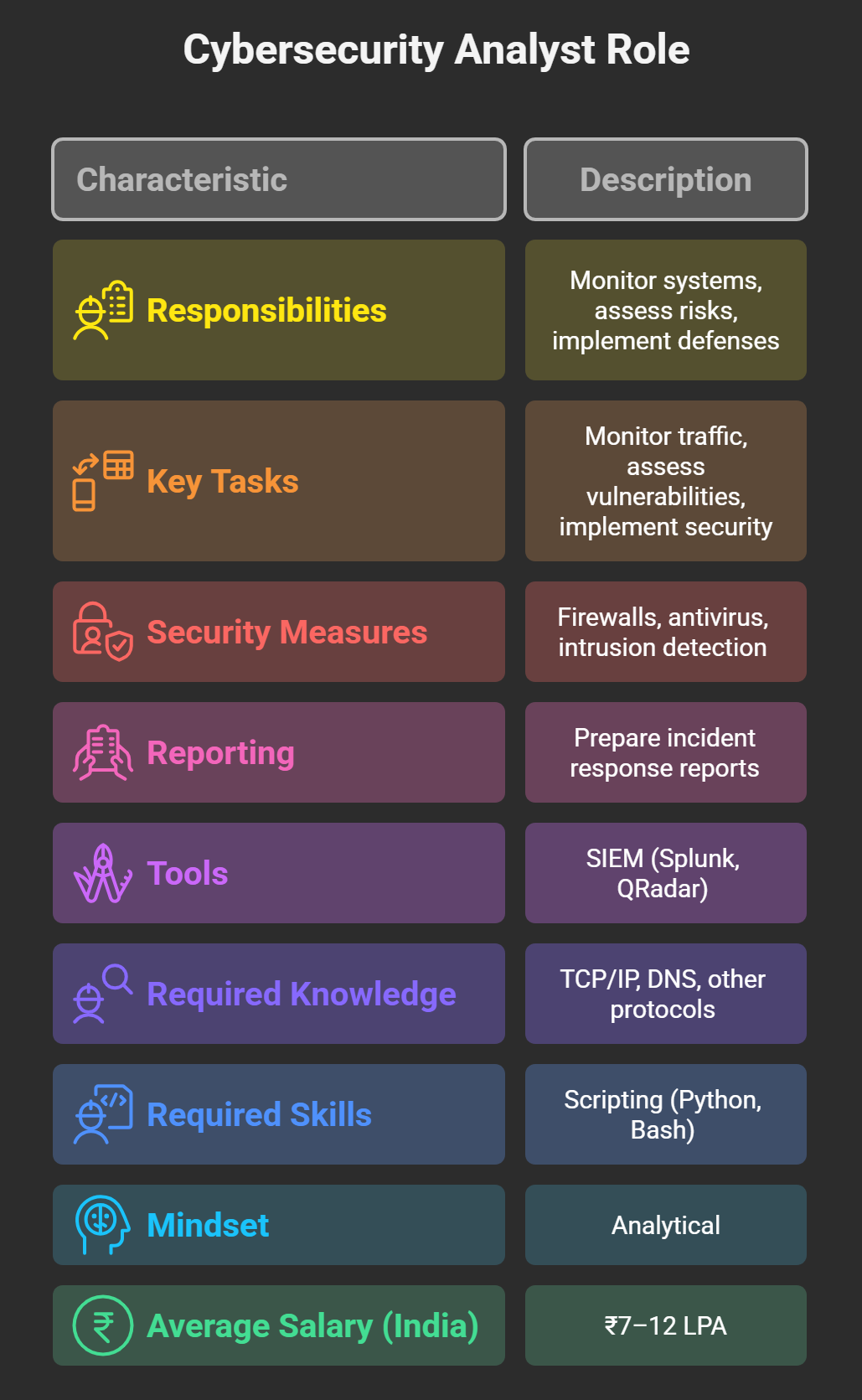
1. Cybersecurity Analyst

What They Do:
Cybersecurity analysts are frontline defenders. They monitor systems for suspicious activity, perform risk assessments, and implement defense protocols. They’re the “detectives” of the digital world, constantly analyzing logs and responding to threats.
Key Responsibilities:
- Monitor network traffic and alerts
- Perform vulnerability assessments
- Implement firewalls, antivirus, and intrusion detection systems
- Prepare incident response reports
Skills Required:
- SIEM tools (e.g., Splunk, IBM QRadar)
- Knowledge of TCP/IP, DNS, and other protocols
- Scripting (Python, Bash)
- Analytical mindset
Average Salary (India): ₹7–12 LPA
2. Ethical Hacker (Penetration Tester)

What They Do:
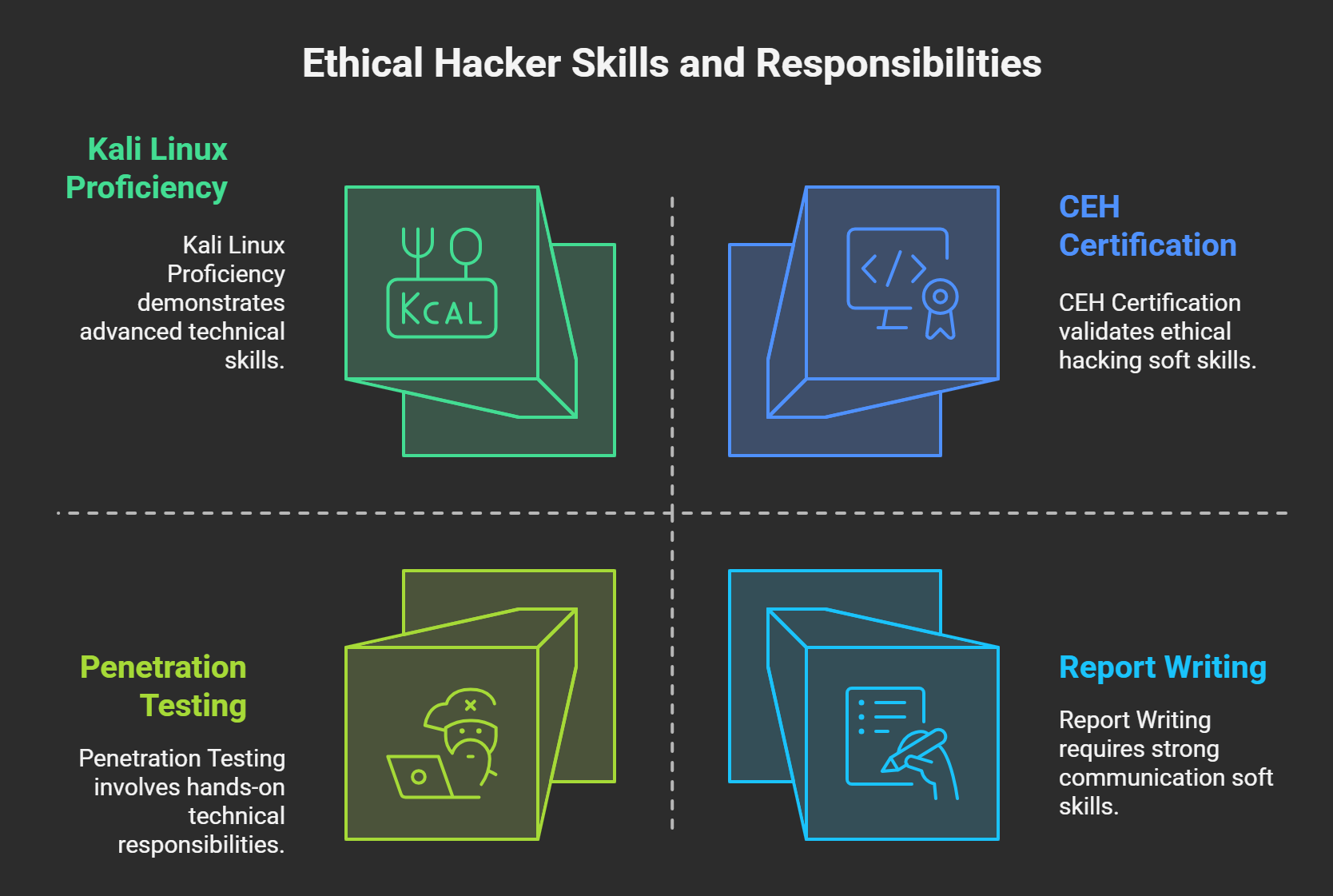
Ethical hackers—aka white-hat hackers—simulate cyberattacks to find vulnerabilities before real hackers do. Companies hire them to “break into” systems legally and report flaws.
Key Responsibilities:
- Conduct penetration tests on applications, networks, and systems
- Identify and report security vulnerabilities
- Recommend mitigation strategies
Skills Required:
- CEH (Certified Ethical Hacker) certification
- Kali Linux, Metasploit, Burp Suite
- OSINT techniques and social engineering
- Report writing
Average Salary: ₹6–15 LPA
3. Cloud Security Engineer

What They Do:
With most businesses migrating to AWS, Azure, and GCP, cloud security engineers ensure that cloud-based infrastructure is secure against breaches and misconfigurations.
Key Responsibilities:
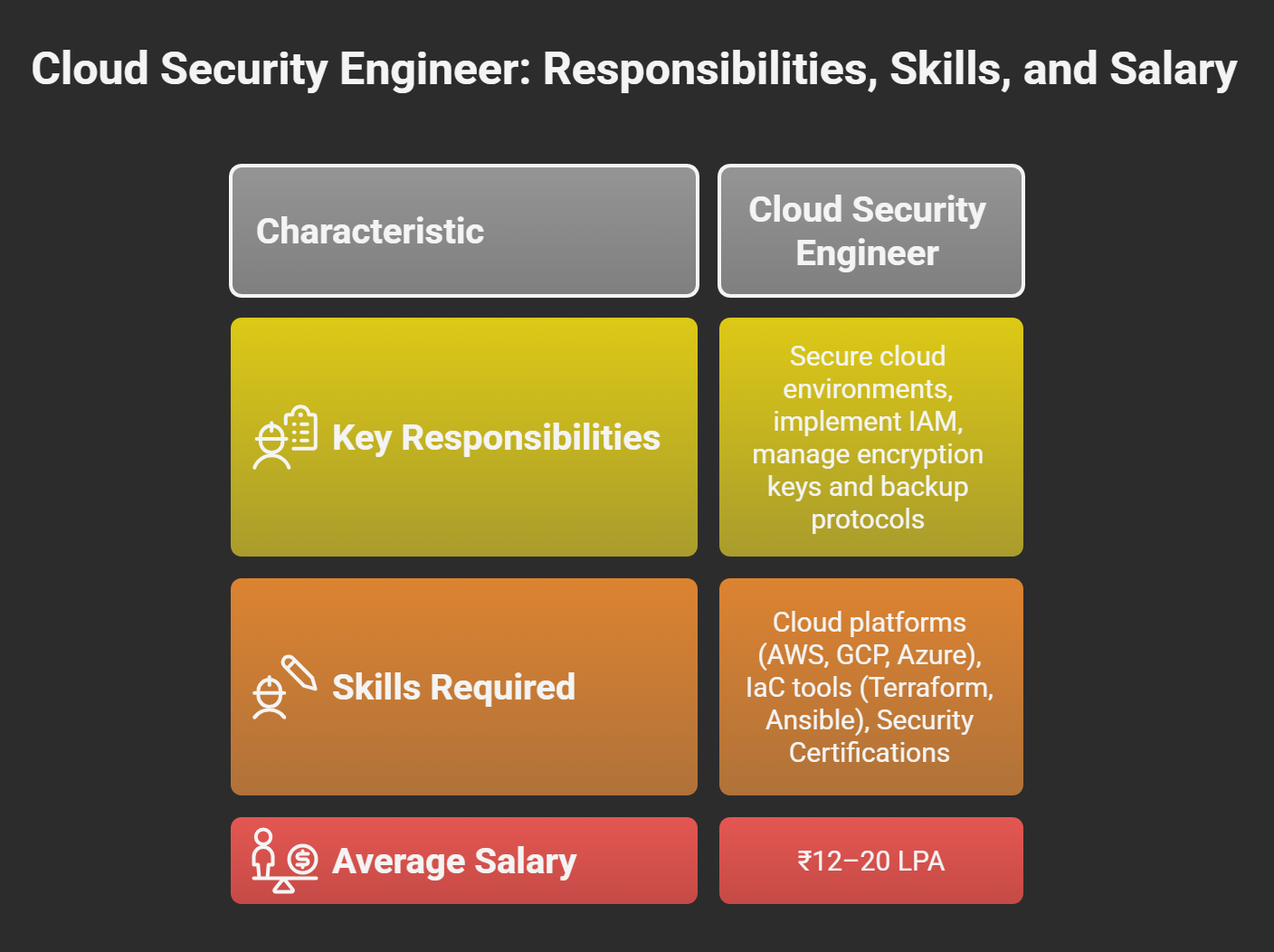
- Secure cloud environments (IaaS, PaaS, SaaS)
- Implement identity & access management (IAM)
- Manage encryption keys and backup protocols
Skills Required:
- Cloud platforms: AWS, GCP, Azure
- Infrastructure as Code (IaC) tools: Terraform, Ansible
- Certifications: AWS Security Specialty, CompTIA Security+
Average Salary: ₹12–20 LPA
4. Security Software Developer

What They Do:
These professionals build security features directly into software applications. They work closely with development teams to write secure code, patch vulnerabilities, and test software integrity.
Key Responsibilities:
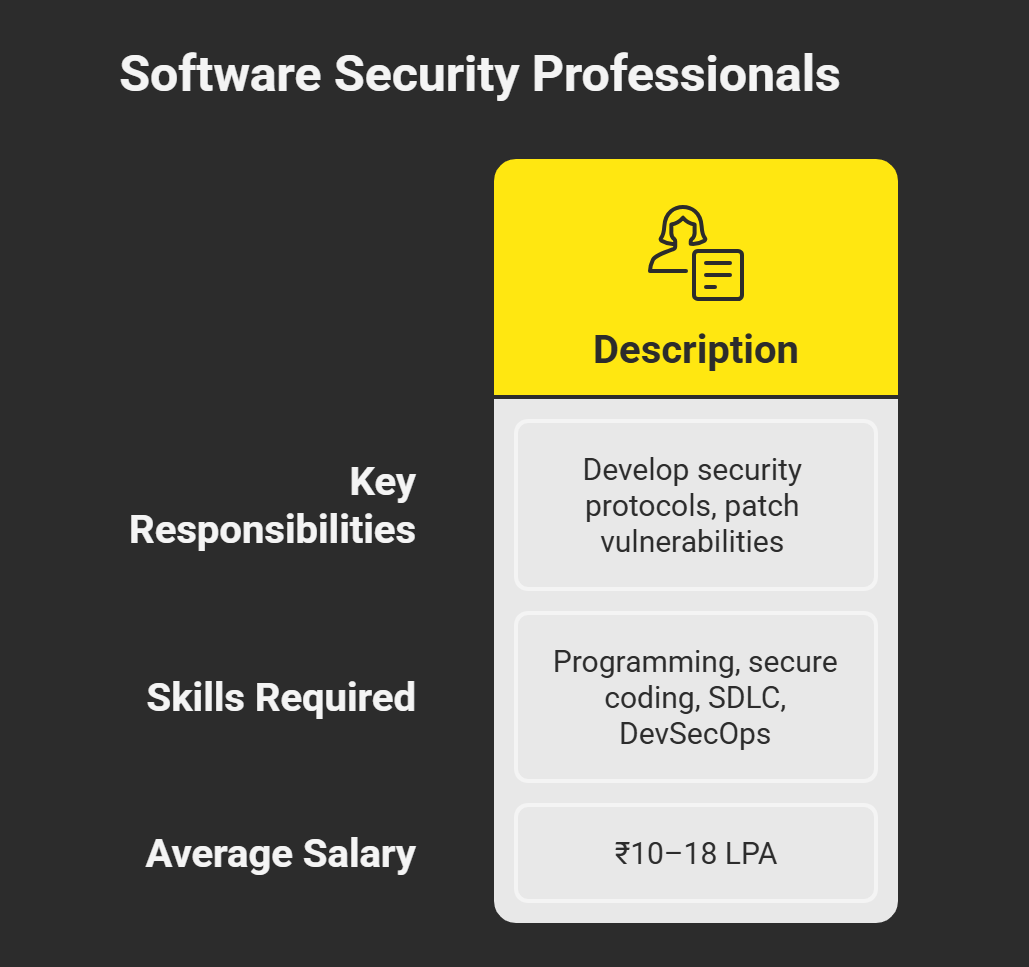
- Develop security protocols in apps
- Perform static and dynamic code analysis
- Patch software vulnerabilities
Skills Required:
- Programming: Java, Python, C++
- Secure coding principles (OWASP Top 10)
- SDLC and DevSecOps knowledge
Average Salary: ₹10–18 LPA
5. Network Security Engineer

What They Do:
They build and maintain secure networks by configuring firewalls, setting up VPNs, and monitoring routers/switches to block malicious traffic.
Key Responsibilities:
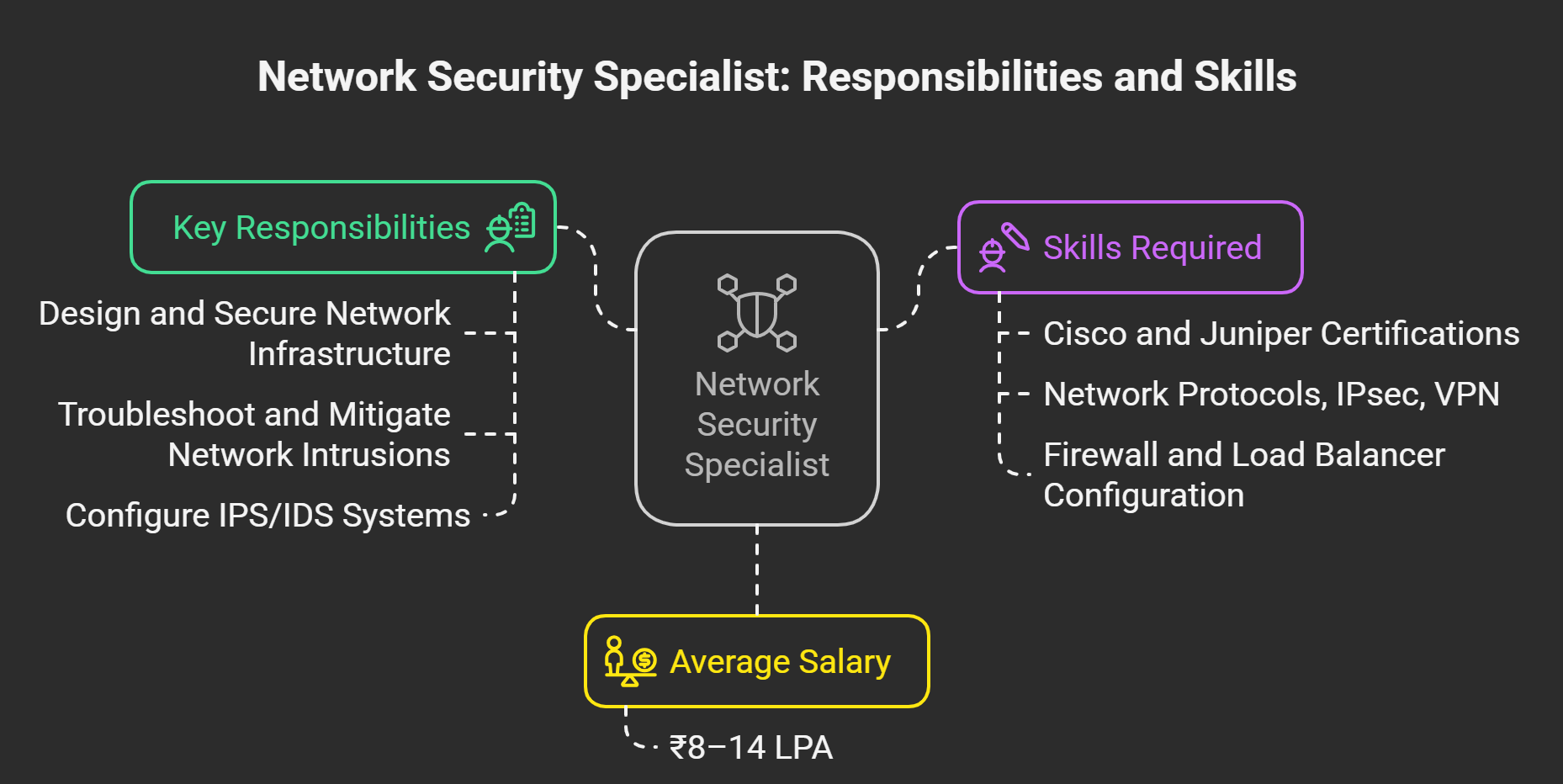
- Design and secure network infrastructure
- Troubleshoot and mitigate network intrusions
- Configure IPS/IDS systems
Skills Required:
- Cisco and Juniper certifications (CCNA Security, CCNP)
- Network protocols, IPsec, VPN
- Firewall and load balancer configuration
Average Salary: ₹8–14 LPA
6. Incident Response Manager

What They Do:
When a breach happens, incident response managers coordinate the digital emergency room. They lead containment, investigation, and recovery efforts.
Key Responsibilities:
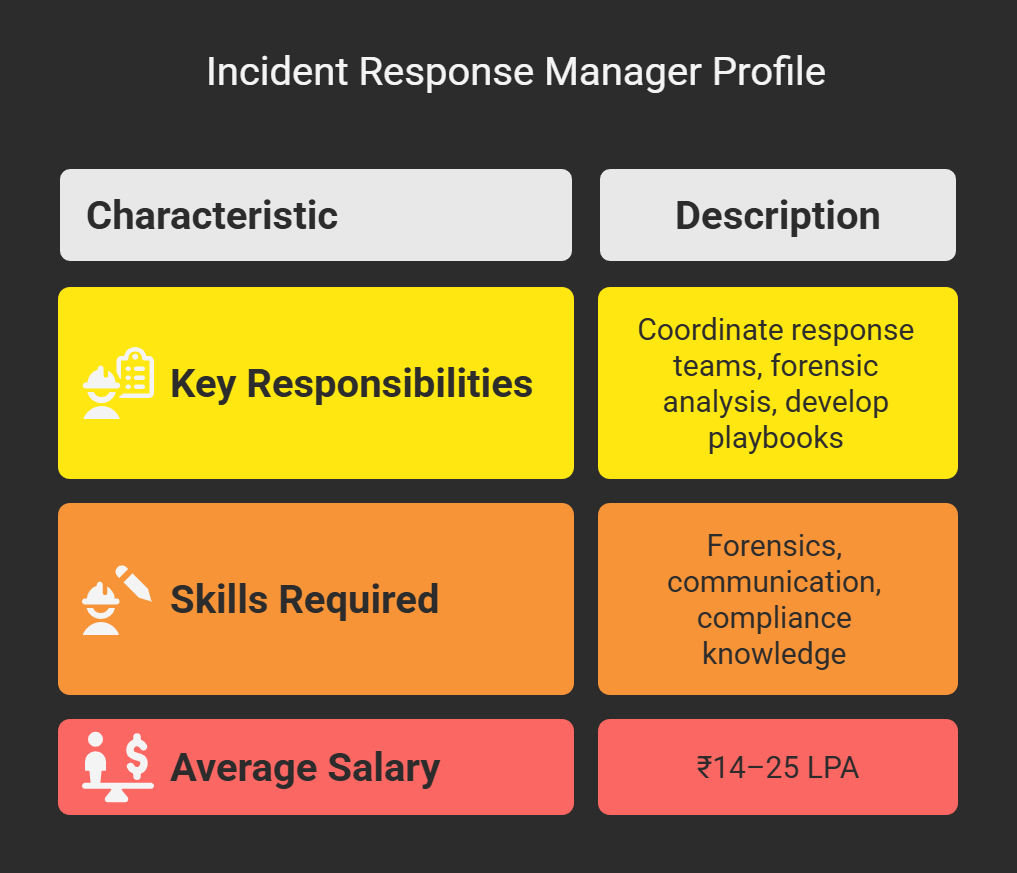
- Coordinate cross-functional response teams
- Forensic analysis of breaches
- Develop incident response playbooks
Skills Required:
- Digital forensics and malware analysis
- Communication and crisis management
- NIST and ISO compliance knowledge
Average Salary: ₹14–25 LPA
7. Chief Information Security Officer (CISO)

What They Do:
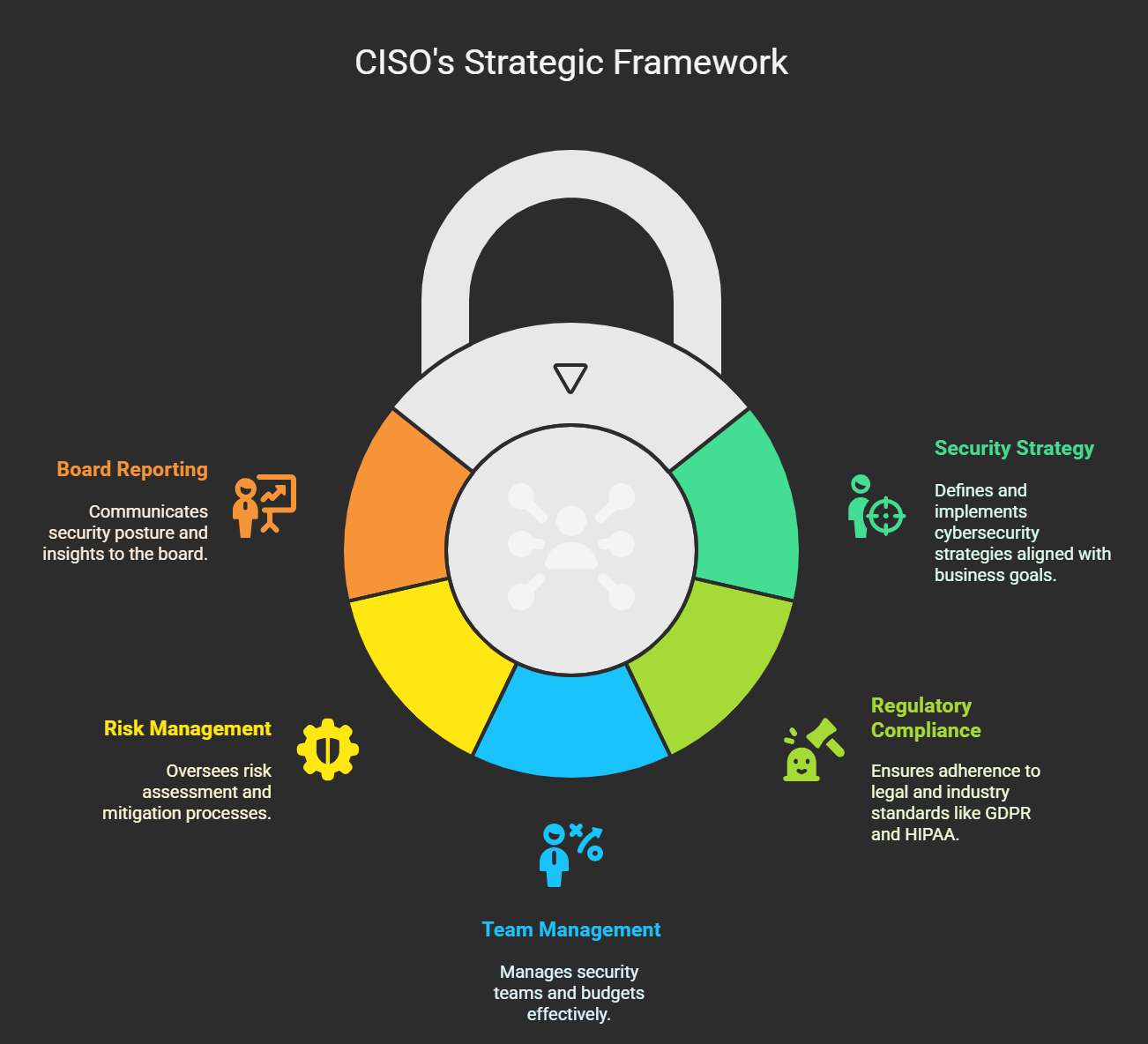
CISOs define the organization’s overall cybersecurity strategy and ensure regulatory compliance. They align security goals with business goals.
Key Responsibilities:
- Manage security teams and budgets
- Oversee risk management and audits
- Report security posture to the board
Skills Required:
- Leadership and strategic thinking
- Governance, Risk, and Compliance (GRC)
- Legal and regulatory knowledge (e.g., GDPR, HIPAA)
Average Salary: ₹30–80 LPA
Why Choose a Cybersecurity Career in 2025?

- High Demand: Every 39 seconds, a cyberattack occurs. This demand isn't slowing down.
- Diverse Career Paths: Technical or strategic, there’s something for everyone.
- Global Opportunities: Cybersecurity roles are in demand worldwide.
- Great Salaries: Pay is competitive, even for entry-level roles.
- Job Security: AI may automate many jobs, but cybersecurity relies on critical human judgment.
How Our Cybersecurity Course at Bisjhintus Prepares You

Looking to break into this high-growth industry? Our Cybersecurity Course at Bisjhintus is your launchpad.
What You’ll Learn:
- Ethical hacking and penetration testing
- Cloud and network security fundamentals
- Hands-on labs with real-world simulations
- Certification prep (CEH, CompTIA, AWS Security)
Why Bisjhintus?
- Industry-vetted curriculum
- Placement support & resume building
- Live mentorship from cybersecurity experts
- Affordable pricing
FAQs (Frequently Asked Questions)

1. Can I start a cybersecurity career without a tech background?
Yes! Many entry-level roles and courses (like ours) are beginner-friendly and focus on building skills from scratch.
2. Which certification should I aim for first?
CEH, CompTIA Security+, and Cisco CCNA Security are great starting points, depending on your target role.
3. Is cybersecurity a future-proof career?
Absolutely. As technology evolves, so do threats, ensuring continued demand for skilled professionals.
4. How long does it take to get job-ready?
With dedicated learning and our course, you can become job-ready in 3–6 months.
5. Are remote cybersecurity jobs available?
Yes. Many roles, like analysts, cloud engineers, and ethical hackers, can be done fully remote.
Conclusion: Your Future in Cybersecurity Starts Now

In a world where cyber threats grow more advanced by the day, the need for skilled cybersecurity professionals has never been greater. From governments and Fortune 500 companies to startups and NGOs, every organization is investing heavily in digital defense. And 2025 is the year when this investment translates into massive job opportunities.
The seven roles we've explored—Cybersecurity Analyst, Ethical Hacker, Cloud Security Engineer, Security Software Developer, Network Security Engineer, Incident Response Manager, and CISO—are not just job titles. They represent gateways to high-paying, impactful, and future-proof careers. Each role allows you to be part of a mission bigger than yourself—protecting privacy, ensuring digital trust, and defending the systems our society depends on.
In short, cybersecurity is not just a trend—it’s a necessity. And right now, you have the chance to be part of this global movement.
Written By
Critical Legal Writer Intern at BISJHINTUS, English Honours (Gold Medalist) / LL.B.

Designed By
UI/UX Designer at BISJHINTUS

Share this post:
Leave a comment
Your email address will not be published. Required fields are marked *
Write a Review
Related Posts

Explore the key differences between cloud security and network security in 2025. Learn about skills,...

Discover how to start a cybersecurity career in 2025 with no experience. This comprehensive beginner...
