

Comparison of Health Education v. Health Promotion: Explained in Detail
-
Home
-
Health Promotion
-
Comparison of Health Education v. Health Promotion: Explained in Detail

Comparison of Health Education v. Health Promotion: Explained in Detail
Discover the key differences between health education and health promotion. Learn their roles, methods, careers, and how they work together for public health impact.

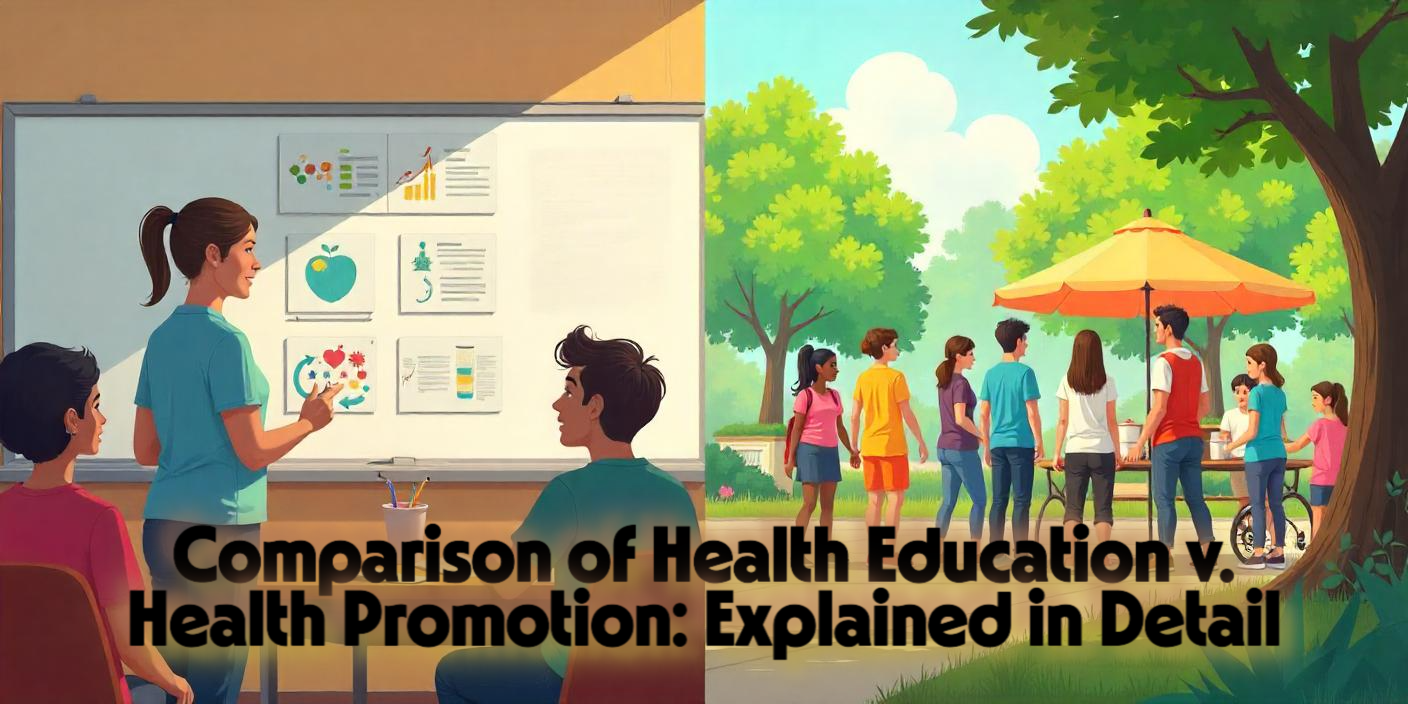
Table of Content
-
Why This Comparison Matters in 2025?
-
Definition and Core Concepts
-
Objectives: Information v. Empowerment
-
Approaches and Methodologies
-
Settings Where They Operate
-
Career Paths and Roles in 2025
-
Skillsets Required
-
Real-World Examples of Application
-
Integration and Overlap
-
Challenges in Implementation
-
2025 Trends: Where Are These Fields Headed?

Why This Comparison Matters in 2025?
In a world increasingly concerned with wellness, sustainability, and preventive care, two terms dominate the conversation: Health Education and Health Promotion.
But are they the same thing?
Do they lead to similar outcomes?
Which offers a broader career path or a deeper impact?
While they’re often used interchangeably, they serve different purposes, employ different strategies, and demand different skill sets. Understanding the key distinctions between health education and health promotion is critical for aspiring professionals, community leaders, educators, and policymakers aiming to make a lasting impact in public health.
This article offers a comprehensive breakdown of these two domains—helping you understand their roles, similarities, and differences in the context of 2025’s evolving health landscape.
1. Definition and Core Concepts
What is Health Education?
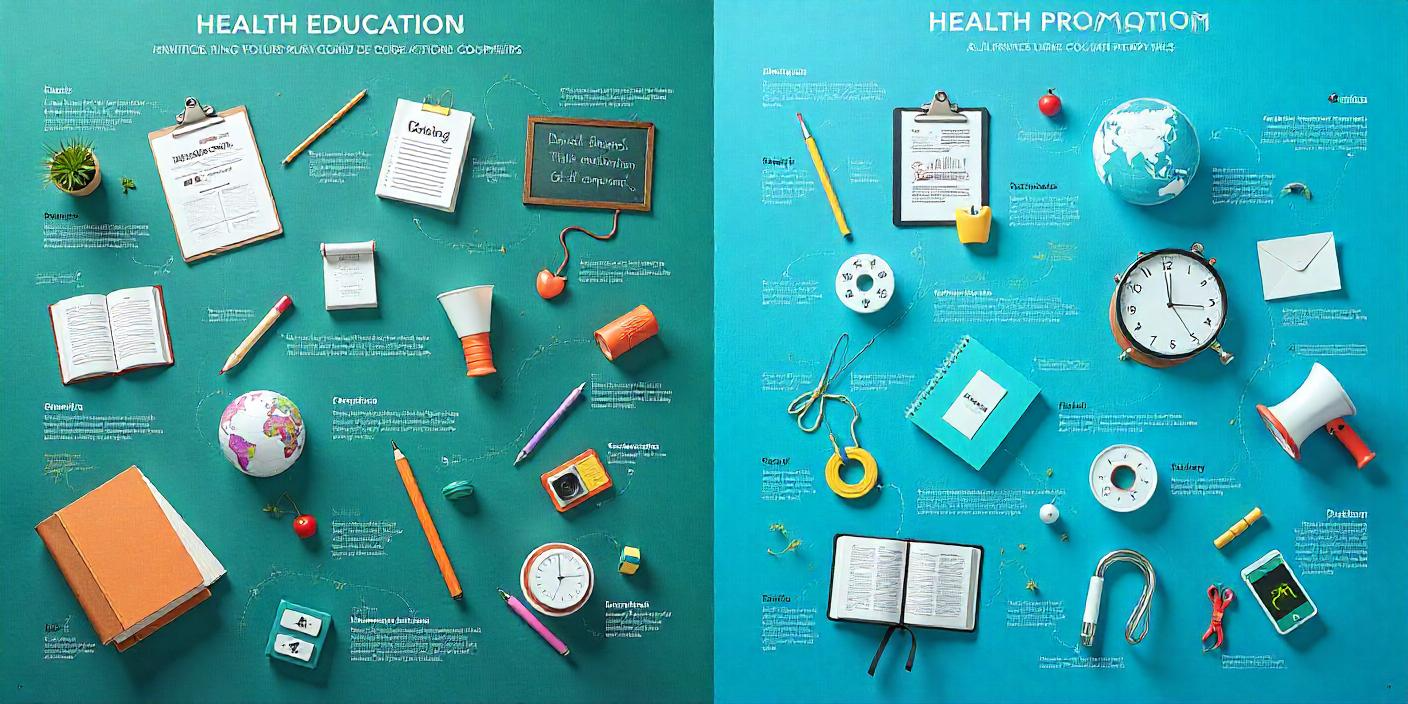
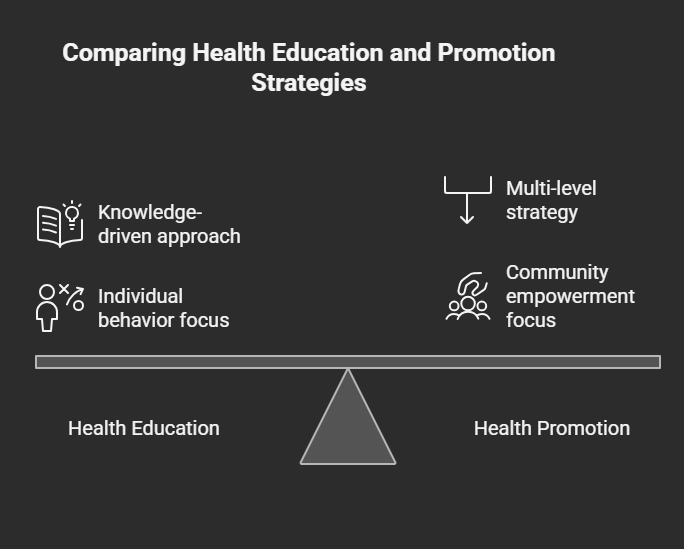
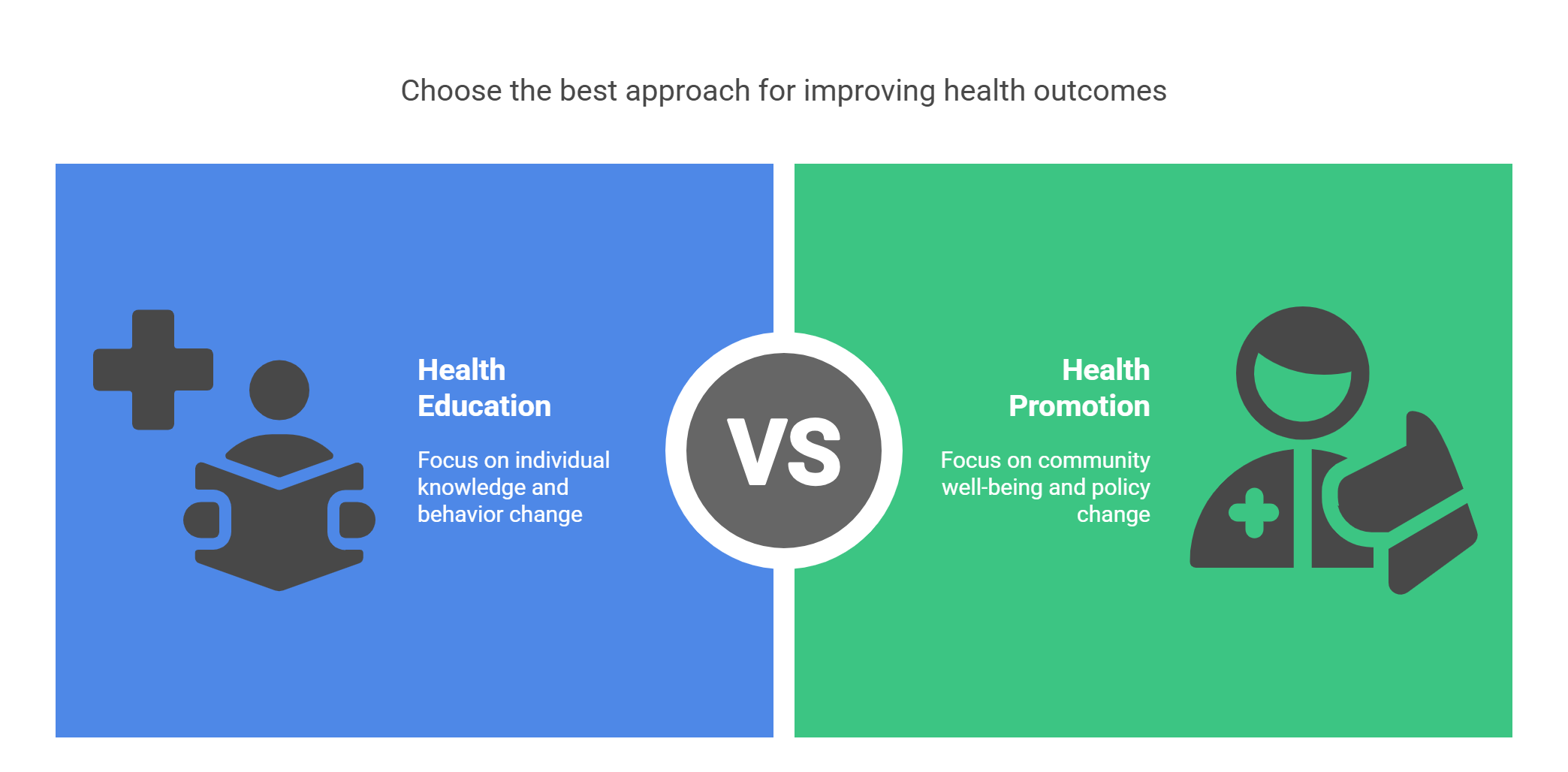
Health Education refers to the structured delivery of information and life skills aimed at influencing individuals to adopt healthier behaviors.
Key Elements:
- Based on science and behavioral theory
- Delivered through lectures, workshops, posters, infographics, and media
- Primarily knowledge-driven
Example: A diabetes awareness class explaining how sugar impacts blood glucose levels.
What is Health Promotion?
Health Promotion is a broader, more inclusive strategy that not only involves education but also includes policy change, environmental modifications, and community empowerment.
Key Elements:
- Multi-level approach: Individual, community, policy
- Combines education with action-oriented strategies
- Focuses on equity and enabling healthier choices
Example: A city-wide anti-smoking initiative that includes education, smoke-free zones, and tax regulation.
2. Objectives: Information v. Empowerment
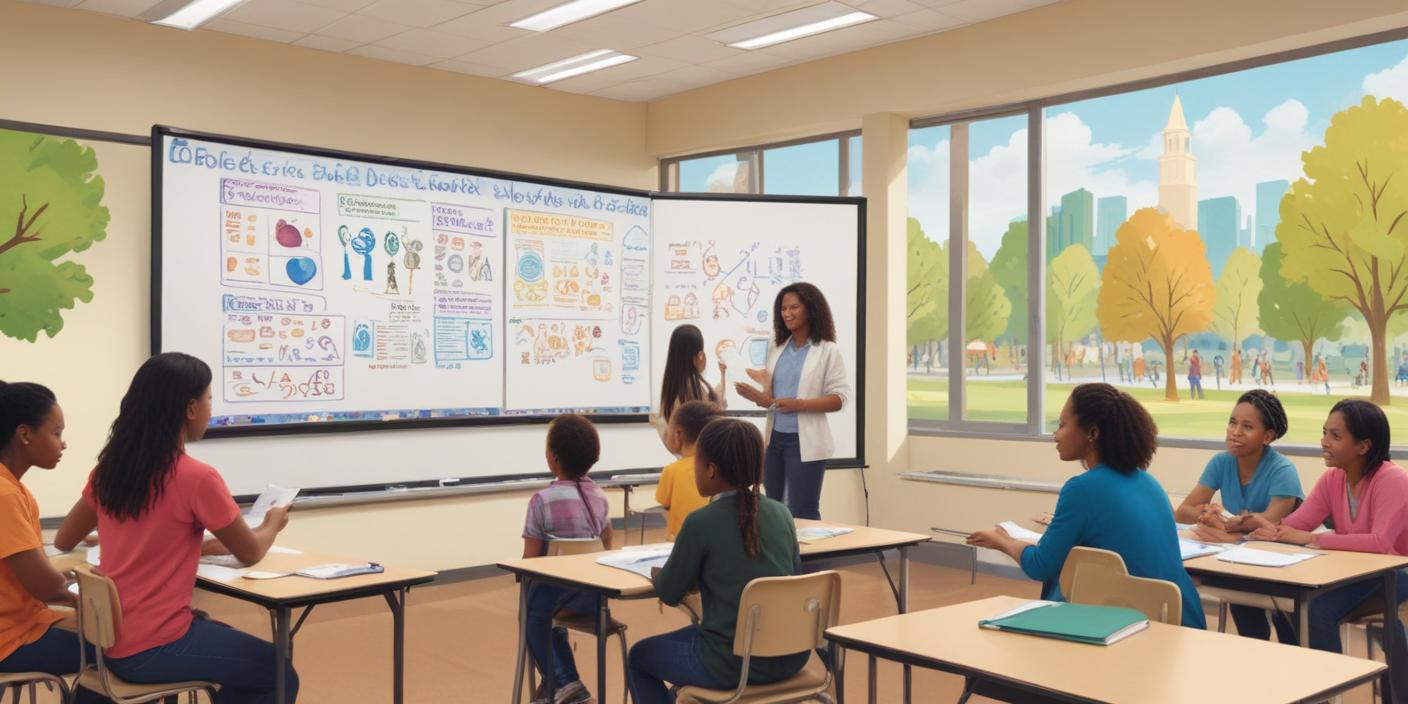
Health Education:
- Aim: Improve individual knowledge and understanding of health topics
- Encourages voluntary behavior change
- Targets specific diseases or risky behaviors
- Focus on prevention through learning
Health Promotion:
- Aim: Improve overall well-being and social determinants of health
- Seeks to empower communities and systems
- Supports policy advocacy and environmental change
- Focus on equity and access
3. Approaches and Methodologies
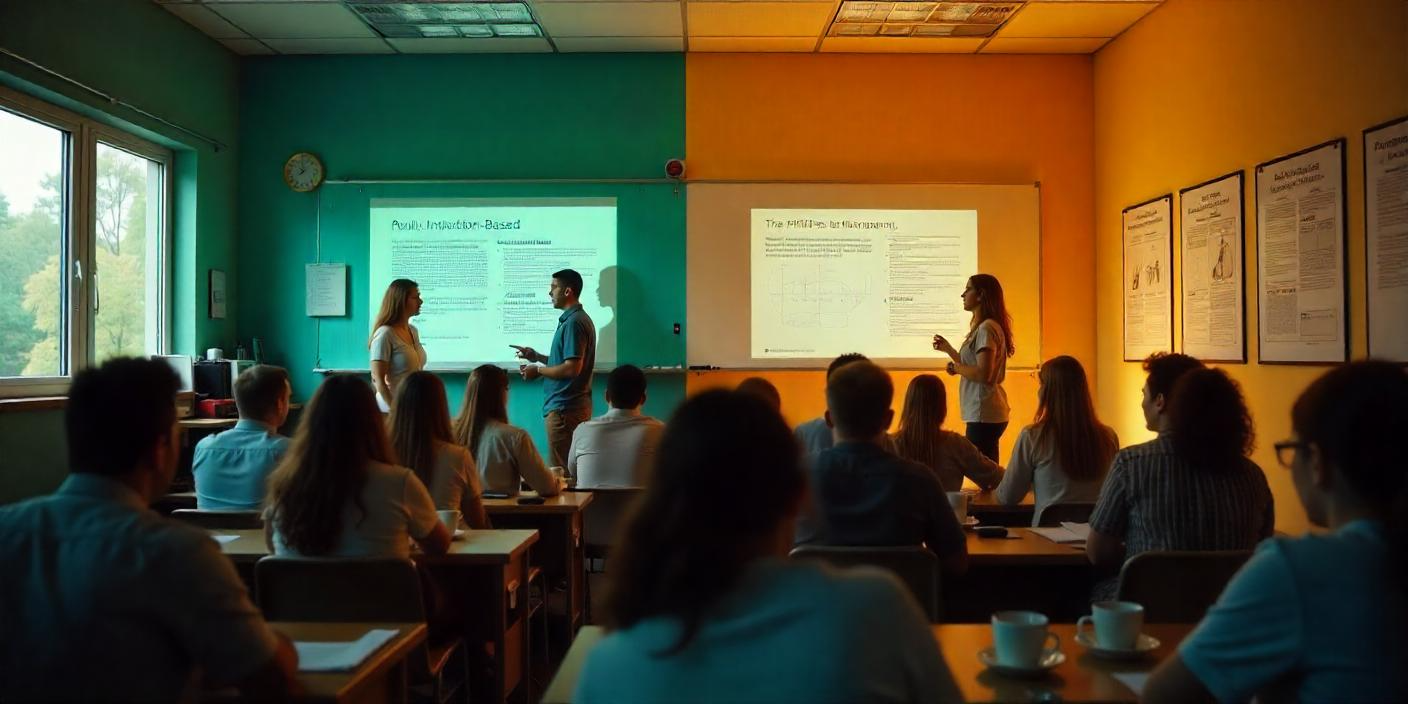
Health Education: Instruction-Based and Individual-Focused
Health education typically adopts a didactic, structured approach. It often relies on lectures, workshops, printed materials, and digital campaigns that are designed to transfer knowledge to specific target audiences.
A common methodology includes:
- Needs assessment
- Objective setting
- Content development
- Delivery through trained educators
- Evaluation of learning outcomes
This method is often linear, with educators crafting content around a specific topic such as nutrition, hygiene, or smoking cessation. Health education is goal-specific, aiming to influence individual behavior through information.
Health Promotion: Systems-Oriented and Holistic
Health promotion adopts a multifaceted and dynamic methodology that moves beyond just information. It integrates policy development, community mobilization, media advocacy, and environmental changes.
Its approach is interdisciplinary, engaging:
- Healthcare systems
- Schools
- Urban planners
- Legislators
- Local communities
For example, reducing obesity in a population might involve health education campaigns in schools, zoning laws to promote walkable cities, taxation on sugary drinks, and ensuring affordable access to nutritious food.
Aspect | Health Education | Health Promotion |
Approach | Top-down (teacher-led) | Bottom-up + policy-driven |
Method | Lectures, campaigns, handouts | Multi-sector collaboration |
Audience | Individuals or small groups | Communities, organizations, populations |
Scope | Specific health issues | Holistic well-being |
Tools | Communication-based | Environmental + legal + educational tools |
4. Settings Where They Operate

Health Education Settings
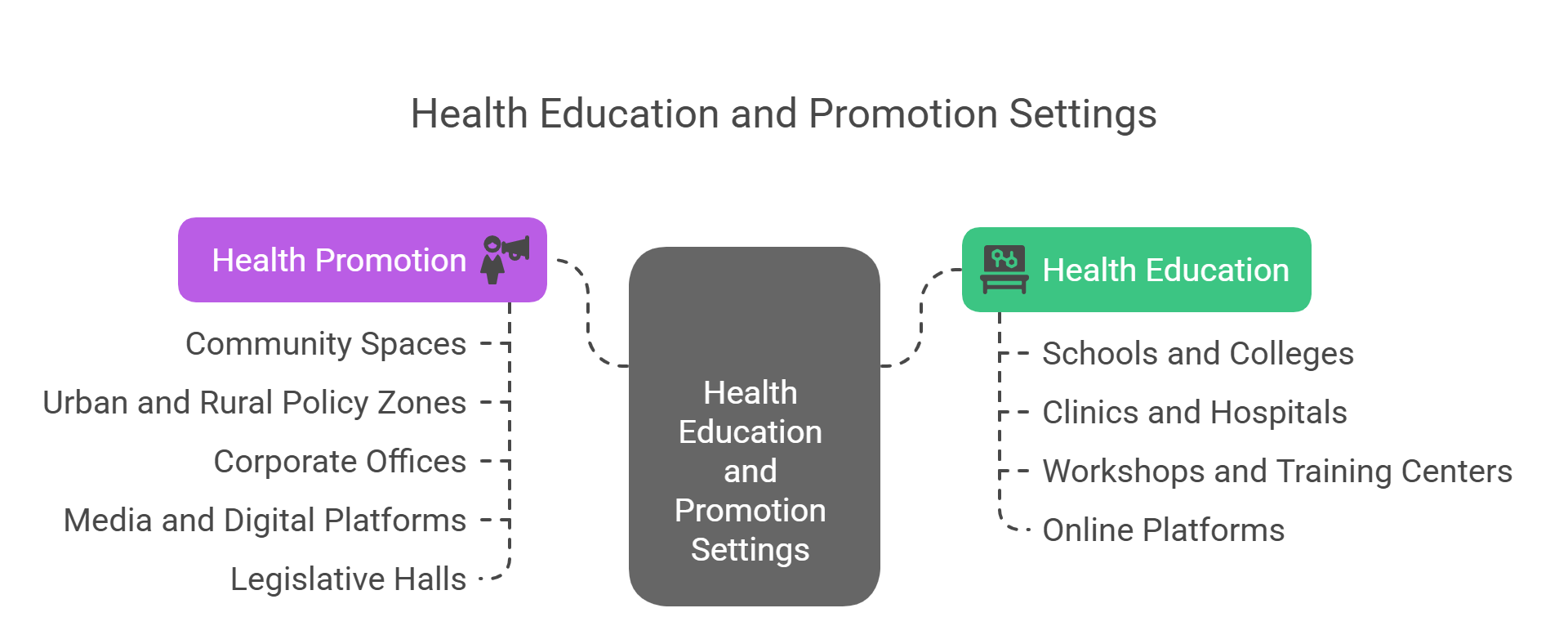
Health education is typically conducted in controlled and organized environments, such as:
- Schools and colleges: Where educators teach about reproductive health, nutrition, or substance abuse.
- Clinics and hospitals: Where patients receive personalized education on managing conditions like diabetes or hypertension.
- Workshops and training centers: Where adults attend wellness programs on stress management or smoking cessation.
- Online platforms: Including e-learning modules, YouTube series, or webinars for public awareness.
The primary feature here is targeted communication, often involving a facilitator and an audience.
Health Promotion Settings
Health promotion activities take place in diverse and often public-facing environments. These can include:
- Community spaces: Running wellness festivals, screenings, or mobile health units.
- Urban and rural policy zones: Working with municipal planners to create walkable communities or clean water initiatives.
- Corporate offices: Encouraging healthy behavior through organizational wellness programs.
- Media and digital platforms: Collaborating with influencers or launching nationwide campaigns (like anti-tobacco or mental health initiatives).
- Legislative halls: Advocating for health-supportive laws and funding.
Health promotion operates across all layers of society, not just at the individual level.
5. Career Paths and Roles in 2025

Health Education Careers
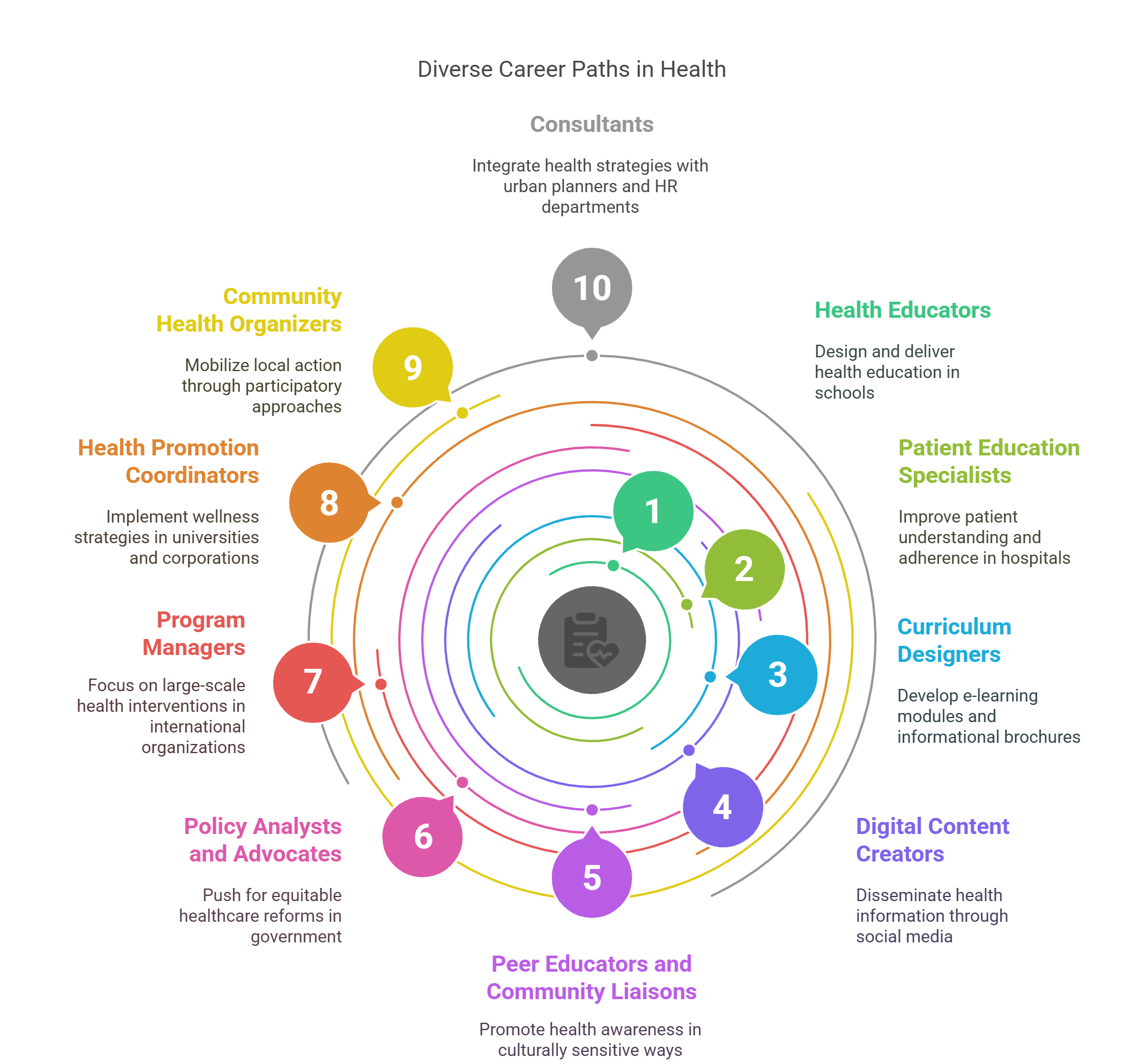
As health education becomes increasingly digital and diversified, new roles have emerged alongside traditional ones. Some career paths include:
- Health Educators in schools or community centers who design and deliver curriculum-based instruction.
- Patient Education Specialists in hospitals who work directly with patients to improve understanding and adherence.
- Curriculum Designers who develop e-learning modules or informational brochures.
- Digital Content Creators who use social media, YouTube, or apps to disseminate accurate health information.
- Peer Educators and Community Liaisons who promote health awareness in culturally sensitive ways.
These roles are crucial in bridging the knowledge gap in various populations.
Health Promotion Careers
Health promotion offers wider systemic influence and requires multi-disciplinary expertise. Key roles include:
- Policy Analysts and Advocates in government or NGOs pushing for equitable healthcare reforms.
- Program Managers in international organizations like the WHO focusing on large-scale interventions.
- Health Promotion Coordinators in universities or corporations who implement wellness strategies.
- Community Health Organizers mobilize local action through participatory approaches.
- Consultants working with urban planners, HR departments, or CSR teams to integrate health strategies.
These roles are often higher-paying and require cross-functional collaboration and leadership.
6. Skillsets Required

Health Educators Must Excel In:
- Public Speaking & Communication: Delivering clear, engaging, and culturally appropriate content.
- Instructional Design: Creating lesson plans, presentations, and visuals.
- Behavioral Science Understanding: Knowing how people learn and change behavior.
- Assessment Techniques: Gauging how well learners grasp and apply knowledge.
- Digital Literacy: Especially in 2025, creating content for online platforms is essential.
Health Promoters Require:
- Strategic Thinking: Planning long-term, multi-stakeholder interventions.
- Policy Awareness: Understanding local, national, and global health regulations.
- Community Engagement: Building trust and mobilizing collective action.
- Data Interpretation: Evaluating program impact using research methods.
- Advocacy and Leadership: Influencing decision-makers and leading health movements.
In summary, educators are knowledge brokers, while promoters are systems changers.
7. Real-World Examples of Application

Health Education Examples:
- A school nutrition campaign teaches students to read food labels and choose healthy snacks.
- A maternal health session in rural clinics explaining postpartum care to new mothers.
- A webinar series targeted at young professionals about managing work-related stress.
These are specific, goal-oriented, and instructional activities.
Health Promotion Examples:
- A city-wide ban on trans fats, supported by advocacy, media outreach, and education.
- A corporate wellness program integrating mental health days, ergonomic design, and lifestyle coaching.
- A community-led vaccination drive where logistics, messaging, and incentives work together.
These examples involve multiple layers of change, not just learning but altering the environment and policies.
8. Integration and Overlap
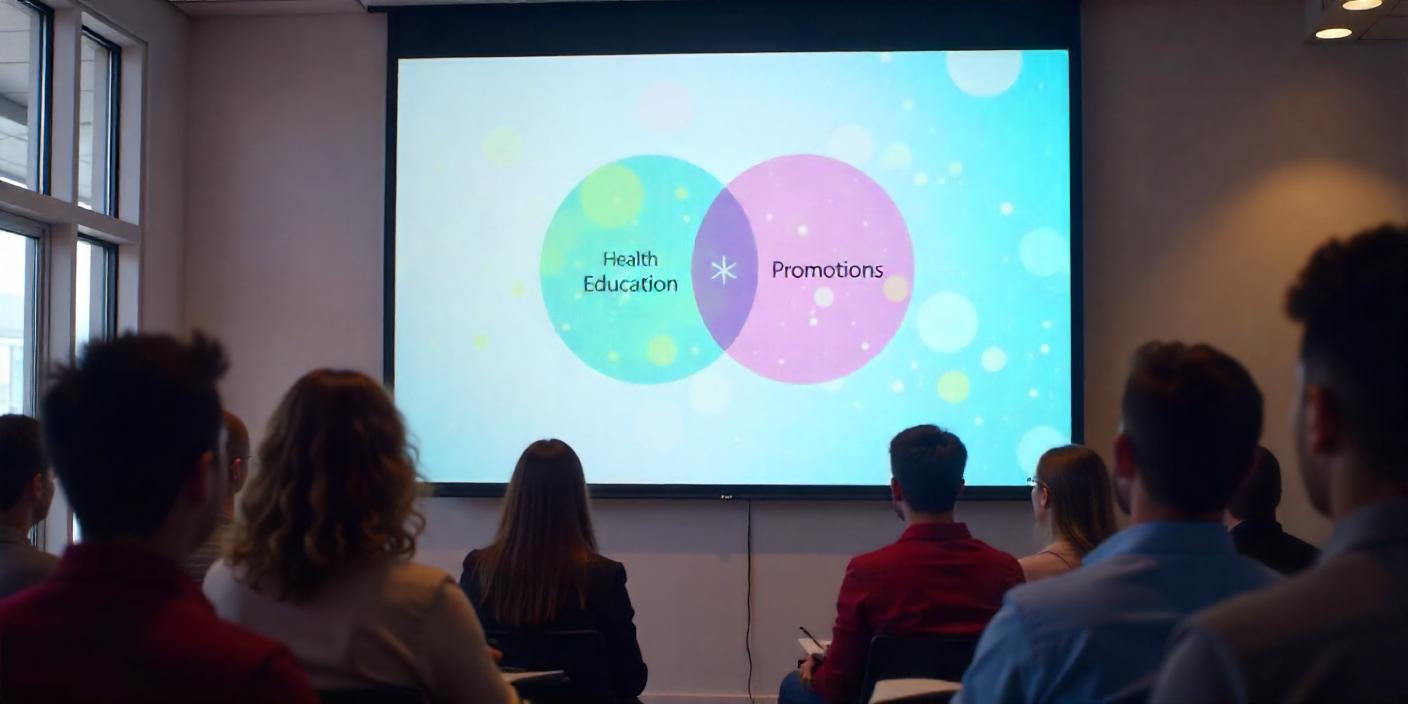
While health education and promotion are often treated as separate domains, the most successful interventions combine both.
Practical Scenarios of Integration:
- A diabetes prevention campaign may start with educational leaflets and videos (health education), followed by a policy push for sugar taxes and improved food labeling (health promotion).
- A school health initiative might include personal hygiene classes (education) along with infrastructure changes like clean bathrooms and sanitary vending machines (promotion).
Blending education with promotion ensures not just awareness but action, not just knowledge but transformation.
Increasingly, institutions train professionals to be "edu-promoters"—those who can do both effectively.
9. Challenges in Implementation

Health Education Challenges:
- One-directional communication can limit feedback and adaptability.
- Literacy and language barriers make it hard to reach marginalized populations.
- Short-term behavior change often relapses without environmental support.
- Lack of resources or training for educators can limit effectiveness.
Health Promotion Challenges:
- Policy resistance due to economic or political interests (e.g., tobacco or fast-food lobbies).
- Measuring success is difficult because change is slow and multifactorial.
- Budget constraints limit the scale of environmental and systemic changes.
- Cultural resistance may arise if initiatives clash with local traditions or norms.
Solving these challenges requires collaboration across sectors, proper funding, and evidence-based planning.
10. 2025 Trends: Where Are These Fields Headed?
Health Education Trends:
- AI-powered learning systems
- Personalized wellness modules
- Gamification of public health learning
- YouTube and TikTok-based micro-education
Health Promotion Trends:
- Smart city integration with health policies
- Community-based participatory research (CBPR)
- ESG (Environmental, Social, Governance) in workplace wellness
- Behavioral nudging using mobile apps and wearables
The future belongs to blended models—digitally driven, equity-focused, and data-informed.
Which One Should You Pursue—and Why Both Matter?
In conclusion, health education and health promotion are two pillars of public health—each essential, each impactful, and often best when they work together.
If you're inclined towards:
- Teaching and explaining complex ideas simply → Health Education is ideal.
- System change and social justice in health → Health Promotion might be your calling.
In 2025, career flexibility allows you to start in one and grow into the other. Many educators evolve into promoters after gaining field experience, and vice versa. Health promotion without education lacks depth; education without promotion lacks sustainability.
To make a lasting impact, embrace both knowledge and action. Empower individuals while transforming communities. That’s the essence of modern public health.
FAQs
1. Is health promotion a broader field than health education?
Yes, it includes education, policy, environmental design, and social mobilization.
2. Can I switch from health education to health promotion?
Absolutely. Many professionals evolve their roles as they gain experience, especially with certifications and policy exposure.
3. Which field offers better salaries?
Typically, health promotion roles (especially in government, international organizations, and corporates) offer higher salaries due to wider responsibilities.
4. Is one more theoretical and the other practical?
Health education tends to be more theoretical and instructional; health promotion is more action-oriented and policy-driven.
5. Are these fields relevant in rural areas?
Very much so. Rural settings benefit enormously from both—education improves knowledge, and promotion changes social norms and environments.
Written By
Critical Legal Writer Intern at BISJHINTUS, English Honours (Gold Medalist) / LL.B.

Designed By
UI/UX Designer at BISJHINTUS

Share this post:
Leave a comment
Your email address will not be published. Required fields are marked *
Write a Review
Related Posts

Discover how to start and grow a rewarding career in health promotion in 2025. Learn key steps, skil...
Discover 6 powerful health-promotion strategies for 2025 and learn how to turn them into action. Enr...
