

Comparison Between Soft Skills and Hard Skills: What Matters Most in 2025
-
Home
-
Leadership Management
-
Comparison Between Soft Skills and Hard Skills: What Matters Most in 2025

Comparison Between Soft Skills and Hard Skills: What Matters Most in 2025
Discover the key differences between soft skills and hard skills in 2025. Discover what matters most for career success and learn how to excel in both.


Table of Content
-
Why This Comparison Matters in 2025
-
What Are Soft Skills?
-
What Are Hard Skills?
-
The Key Differences Between Soft and Hard Skills
-
Why Soft Skills Are Gaining More Importance in 2025
-
Industries Where Hard Skills Still Dominate
-
Balancing Both: The Formula for Career Success
-
Developing Soft Skills: Practical Methods That Work
-
How to Upgrade Your Hard Skills in the Digital Age
-
Career Scenarios: When Soft Skills Win vs. When Hard Skills Win
-
How Employers Evaluate Both in Interviews and Resumes
-
Future Outlook: Skills That Will Dominate 2030
-
Choosing the Right Training Program for Your Skill Gap
-
Why the Bisjhintus Course Can Help You Master Both
-
FAQs
Why This Comparison Matters in 2025
In today’s rapidly evolving workplace, understanding the difference between soft skills and hard skills is no longer optional—it's critical. As we navigate an era dominated by AI, automation, hybrid work, and constant upskilling, the debate around “What matters more?” has intensified. Do you need to master technical tools to stay relevant, or are communication and adaptability more valuable in this human-first economy?
The reality is, both sets of skills are essential. But their relative value is shifting depending on industry, job level, and the evolving expectations of employers.
A recent LinkedIn report found that 92% of talent professionals believe soft skills are just as or more important than hard skills, yet technical certifications continue to dominate hiring checklists. This paradox is why understanding, comparing, and balancing both is the key to career resilience, job security, and professional growth in 2025 and beyond.
1. What Are Soft Skills?

Soft skills refer to your personal attributes, emotional intelligence, and interpersonal capabilities—essentially, how you interact, lead, and communicate. Unlike hard skills, which can be measured or certified, soft skills are harder to quantify but equally, if not more, valuable.
Common Soft Skills in 2025:
- Emotional Intelligence (EQ): Understanding and managing your emotions and those of others.
- Communication: Verbal, non-verbal, and written clarity.
- Adaptability: Being flexible in the face of change.
- Leadership & Influence: Guiding individuals or teams toward shared goals.
- Collaboration: Working effectively across roles and departments.
- Time Management: Prioritizing tasks and maintaining productivity.
- Creativity & Innovation: Bringing fresh ideas and solutions.
Why it matters:
These skills help you navigate workplace relationships, resolve conflict, and influence without authority—all crucial in a remote or hybrid setup where self-management and virtual rapport-building define success.
Soft skills are what make you pleasant to work with, dependable under pressure, and an inspiring team player.

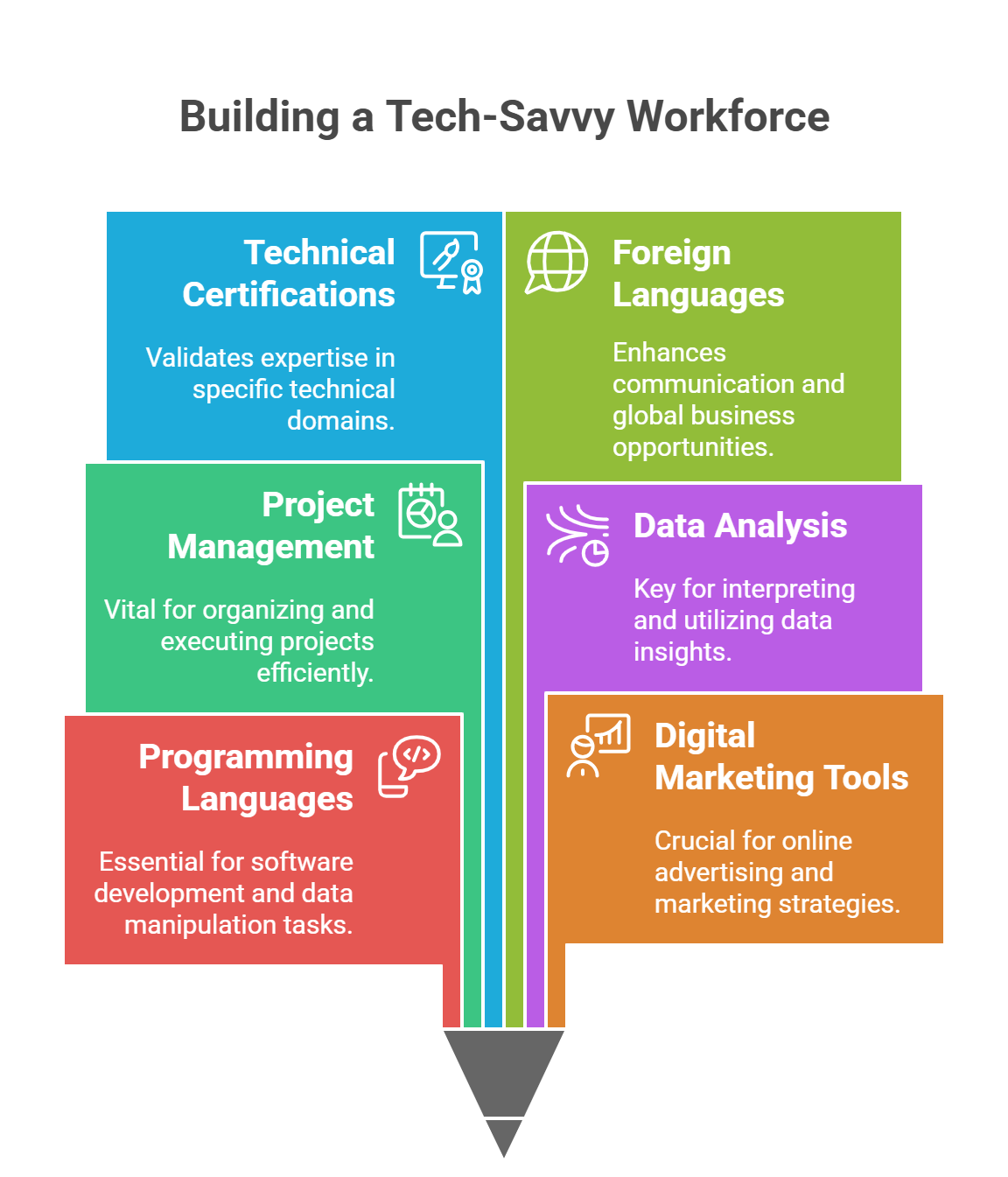
2. What Are Hard Skills?

Hard skills are teachable, measurable abilities acquired through education, training, or practice. They’re often job-specific and essential for task execution.
Examples of Hard Skills in 2025:
- Programming Languages: Python, JavaScript, SQL, R
- Digital Marketing Tools: SEO, Google Ads, Analytics, Meta Ads
- Project Management: Agile, Scrum, Gantt Charts
- Data Analysis: Excel, Tableau, Power BI
- Technical Certifications: AWS, PMP, CFA, Six Sigma
- Foreign Languages: French, Mandarin, Spanish
Accounting Software: QuickBooks, Tally, SAP
Why it matters:
Hard skills demonstrate your ability to do the job technically. Whether you're crunching numbers, analyzing big data, managing ad campaigns, or building products, these skills prove your competence.
They’re easier to showcase on a resume and often form the basis of hiring filters in ATS (Applicant Tracking Systems).
3. The Key Differences Between Soft and Hard Skills

Aspect | Soft Skills | Hard Skills |
Definition | Interpersonal, emotional, and behavioral abilities | Technical, quantifiable, job-specific knowledge |
Learnability | Acquired over time through experience | Acquired via training, education, or certification |
Measurement | Subjective (interviews, observation, feedback) | Objective (tests, portfolios, certificates) |
Application | Used in team dynamics, leadership, and adaptability | Used in task completion, analysis, and execution |
Examples | Empathy, communication, and critical thinking | Python, Excel, SEO, accounting |
This comparison proves that while hard skills may get your foot in the door, soft skills determine how far you’ll go.
4. Why Soft Skills Are Gaining More Importance in 2025

The modern workplace is not just digital—it’s deeply human. As machines automate tasks, the skills that remain uniquely human—empathy, persuasion, problem-solving, creativity—are rising in demand.
Reasons Soft Skills Are Dominating:
- AI and automation handle more technical work, making human interactions even more valuable.
- Remote and hybrid models require trust-building and self-management.
- Cross-functional roles need emotional intelligence and communication to navigate diverse teams.
- Leadership is democratized, meaning everyone—regardless of title—must demonstrate influence and initiative.
A study by McKinsey found that employers now rank soft skills as critical for leadership and long-term success, particularly in industries like healthcare, education, management, and customer relations.

5. Industries Where Hard Skills Still Dominate

While soft skills are in demand, there are domains where technical skills are the cornerstone of performance.
Examples:
- Engineering & IT: Coding, architecture, software testing
- Finance: Quantitative analysis, taxation, accounting
- Data Science: Statistical modeling, machine learning
- Manufacturing & Construction: CAD design, machinery handling
- Healthcare: Surgical precision, diagnostics, pharmacology
In these sectors, hard skills remain non-negotiable, and soft skills enhance rather than replace them. That’s why it’s crucial to assess your industry before over-investing in either skill type.

6. Balancing Both: The Formula for Career Success

Think of your career as a bridge—hard skills are the foundation, but soft skills are the guardrails and structure that keep it stable and moving forward.
Why Balance Is Key:
- Hard skills get you hired. Soft skills get you promoted.
- Projects succeed when technical execution meets team synergy.
- A tech wizard without communication skills often fails to scale.
- A great speaker without expertise lacks credibility.
Recruiters now look for “T-shaped professionals”—those who have deep technical expertise (the vertical stroke) and broad soft skills (the horizontal stroke).

7. Developing Soft Skills: Practical Methods That Work

Contrary to popular belief, soft skills can be learned—they just take deliberate effort and self-awareness.
Methods to Develop Soft Skills:
- Enroll in soft skill-specific courses (public speaking, negotiation, emotional intelligence)
- Join Toastmasters or Debate Clubs
- Seek mentorship and 360° feedback
- Volunteer to lead projects or presentations
- Read books like “Emotional Intelligence” by Daniel Goleman
- Attend networking events to practice conversation flow
Also, use tools like:
- Journaling for self-reflection
- Meditation for emotional regulation
- Role-playing for conflict resolution

8. How to Upgrade Your Hard Skills in the Digital Age

With rapid tech changes, hard skills expire fast. Keeping them fresh is crucial.
Ways to Stay Technically Relevant:
- Enroll in certification programs (Coursera, LinkedIn Learning, edX, etc.)
- Participate in industry bootcamps or hackathons
- Take up micro-courses every 3–6 months
- Stay updated with tech news and blogs
- Build a portfolio on GitHub or Behance
Remember, showcasing hard skills is easier through:
- Resume bullet points
- Case studies
- Project demos
- Digital badges and certificates

9. Career Scenarios: When Soft Skills Win vs. When Hard Skills Win

Scenario | Winning Skill |
Job Interview | Soft Skills (communication, confidence) |
Onboarding a New Team | Soft Skills (adaptability, empathy) |
Technical Task Execution | Hard Skills (software use, data analysis) |
Conflict Resolution | Soft Skills (emotional intelligence) |
Building a Product | Both (technical creation + collaboration) |
Insight: The most successful professionals are those who can switch skill modes fluidly based on context.
10. How Employers Evaluate Both in Interviews and Resumes

Resume:
- Hard Skills: Certifications, tools listed, portfolios
- Soft Skills: Often inferred via language (“led team of…”, “resolved conflict…”)
Interview:
- Hard Skills: Technical tests, whiteboard challenges
- Soft Skills: Behavioral interviews, group exercises, scenario questions
Employers are increasingly using psychometric assessments to evaluate personality and emotional agility.

11. Future Outlook: Skills That Will Dominate 2030

Looking ahead, hybrid roles will demand both skill sets more than ever.
Dominant Skills by 2030:
- Digital Literacy (Hard)
- Emotional Intelligence (Soft)
- Data-Informed Decision-Making (Hard + Soft)
- Storytelling with Data (Soft + Hard)
- Cross-cultural Communication (Soft)
- AI Integration (Hard)
- Human-Centered Leadership (Soft)
The future belongs to those who can think like humans and work like machines.

12. Choosing the Right Training Program for Your Skill Gap

Here’s how to decide:
Evaluate:
- Current skill gaps
- Industry requirements
- Preferred learning style (self-paced vs. guided)
- Desired career goals
Platforms like Coursera, Udemy, LinkedIn Learning, and Bisjhintus offer programs for both soft and hard skill development.
Look for:
- Feedback and mentoring options
- Course reviews and ratings
- Certifications that matter

Why the Bisjhintus Course Can Help You Master Both?

While this article is platform-neutral, we must highlight that Bisjhintus offers a unique dual-track leadership course that blends both worlds:
Course Highlights:
- Soft Skills Training: Emotional intelligence, communication, leadership
- Hard Skills Add-On: Digital tools, project management, analytics
- Live Mentorship & Projects
- Recognized Certification + LinkedIn Badge
- Flexible Scheduling for Working Professionals
If you're ready to grow your career through skill-building, this is a one-stop program worth considering.
Explore the Course [Link]
Frequently Asked Questions (FAQs)

Q1. What is the main difference between soft skills and hard skills?
Soft skills are interpersonal and behavioral, while hard skills are teachable and technical.
Q2. Which is more important for career growth in 2025?
Both are critical, but soft skills are becoming increasingly important due to remote work and automation.
Q3. Can soft skills be learned, or are they natural?
They can absolutely be learned through practice, feedback, and intentional training.
Q4. How do I showcase soft skills on a resume?
Use action verbs and results-based examples that highlight communication, leadership, or adaptability.
Q5. Are there courses that combine both skill types?
Yes! Platforms like Bisjhintus offer hybrid programs that teach both leadership (soft) and tool-based (hard) skills.
Written By
Critical Legal Writer Intern at BISJHINTUS, English Honours (Gold Medalist) / LL.B.

Designed By
UI/UX Designer at BISJHINTUS

Share this post:
Leave a comment
Your email address will not be published. Required fields are marked *
Write a Review
Related Posts

Learn how to develop powerful leadership skills for career success in 2025. Build confidence, lead e...
Discover 5 compelling reasons to enroll in a leadership course today. Build skills, earn a certifica...
