


Comparison Between Global Expansion and Local Domination: What’s Better for Startups in 2030?
Examine the advantages and disadvantages of global expansion versus local domination for startups in 2030. Discover which growth strategy offers founders greater sustainability, profitability, and long-term impact.


Table of Content
-
Startup Growth in 2030: A Landscape of Dual Opportunities
-
Understanding Global Expansion: Scope, Risks, and Rewards
-
The Case for Local Domination: Depth Over Distance
-
Operational Complexity: Global Reach vs Local Precision
-
Customer Acquisition and Brand Loyalty: Mass Appeal vs Micro Resonance
-
Investor Preferences and Valuation Impacts
-
Join the Founder MBA 2030: Build Fast. Scale Smart.
-
Frequently Asked Questions

Startup Growth in 2030: A Landscape of Dual Opportunities
The startup ecosystem in 2030 is more interconnected and fragmented than ever. Entrepreneurs now face a core strategic decision early on: should they aim for global expansion or focus on dominating their local markets first?
Both paths offer significant opportunities—but choosing without strategic clarity can lead to failure. Global expansion promises scale, revenue diversity, and international prestige, but it comes with regulatory hurdles, cultural friction, and operational complexity. Local domination offers deep market saturation, brand intimacy, and leaner operations, yet risks limited scalability and market saturation.
Founders must weigh not just their product’s potential, but their team’s capacity, resource availability, and long-term vision. In 2030, the wrong growth strategy can drain a startup’s runway, while the right one can lead to unicorn status.
This article explores both approaches—deeply and equally—so you can decide: Should your startup go wide or go deep?
1. Understanding Global Expansion: Scope, Risks, and Rewards

Global expansion involves taking your startup’s offerings across national borders to serve international customers. In 2030, this is no longer reserved for late-stage ventures. Thanks to AI-driven localization, digital distribution, and global hiring platforms, even pre-Series A startups are expanding globally within months.
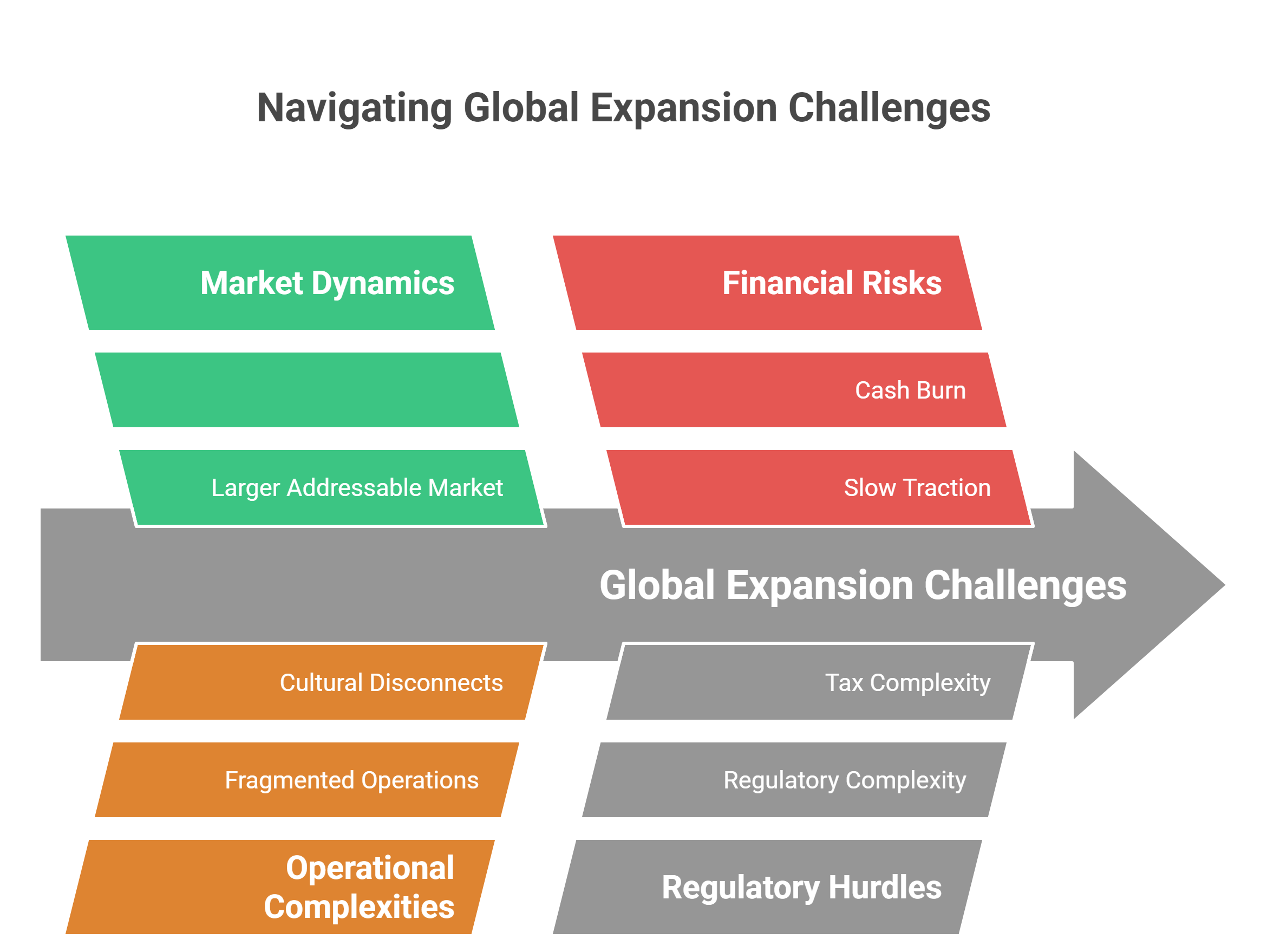
Why Founders Choose Global Expansion:
- Larger Addressable Market: Scaling internationally means access to more customers and industries.
- Investor Appeal: Global traction boosts valuation and positions the startup as a category leader.
- Resilience Through Diversification: Economic shifts in one market won’t cripple the business if revenue comes from several.
- Talent Pool Access: Startups can hire globally, tapping into skills and price advantages.
But There Are Risks:
- Cultural Disconnects: Messaging that works in one country might fail in another.
- Regulatory & Tax Complexity: Every region adds legal, tax, and compliance overhead.
- Fragmented Operations: Managing product, marketing, and customer support across time zones increases coordination burden.
- Cash Burn: Global marketing and infrastructure can quickly consume capital, especially if early traction is slow.
In short, global expansion is a high-leverage move—but it demands infrastructure, capital, and operational maturity. It’s not about simply translating your website; it’s about rebuilding your go-to-market model for every region you enter.
2. The Case for Local Domination: Depth Over Distance

Local domination is a growth strategy focused on owning a single geography or market niche with absolute authority. In 2030, many startups are rejecting the pressure to “go global fast” and are instead choosing to embed deeply within a single region, culture, or city.
Why Local Domination Works:
- Faster Word-of-Mouth Growth: Proximity leads to trust. A tight community can drive organic brand buzz.
- Refined Customer Feedback Loops: Being close to your market enables faster iteration and stronger product-market fit.
- Lower Operating Costs: Startups avoid the complexity and cost of international legal, tax, and marketing setups.
- Market Leadership: Owning a city or region can act as a springboard for future expansion.
Potential Drawbacks:
- Growth Ceiling: Once local saturation is reached, growth slows unless the model evolves.
- Investor Pushback: Some investors may see local-first strategies as too conservative or niche.
- Competitive Copycats: Staying local too long might invite competitors from larger players eyeing your market.
However, founders pursuing local domination often enjoy stronger community loyalty, better retention, and a healthier profit margin, especially in service, logistics, or experience-based startups. This strategy is about becoming undisruptable at home—before going abroad.

3. Operational Complexity: Global Reach vs Local Precision

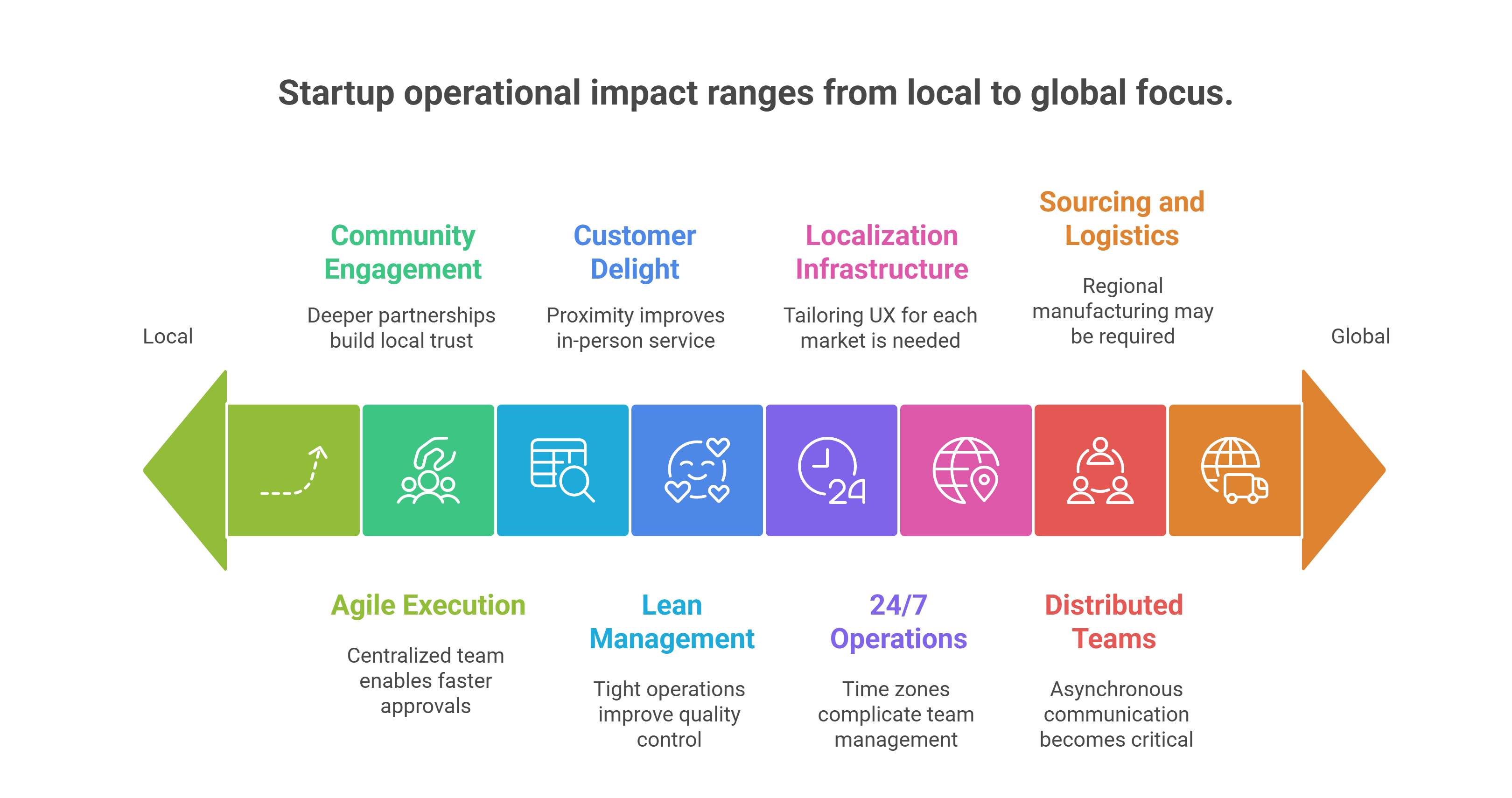
Beyond the philosophical or strategic choice, the decision between global and local also affects how your startup runs every day. Global expansion introduces a layer of complexity that requires structure, automation, and cultural competence. Local domination enables tighter feedback loops and faster execution—but can limit operational innovation.
Global Expansion: Operational Impact
- 24/7 Operations: Time zones stretch your customer support and team management.
- Localization Infrastructure: Each market needs tailored UX, pricing, legal compliance, and support.
- Distributed Teams: Requires strong asynchronous communication, documentation, and leadership depth.
- Sourcing and Logistics: Products may need to be regionally manufactured, shipped, or stored.
Local Domination: Operational Impact
- Agile Execution: Centralized team, faster approvals, fewer moving parts.
- Community Engagement: Deeper partnerships with local influencers, vendors, and customers.
- Lean Management: Easier to run tight operations, track KPIs, and control quality.
- Customer Delight: Proximity makes in-person service, trust-building, and loyalty easier.
Founders must match their operational DNA to the strategy. If you’re optimized for agility, don’t overreach globally too soon. If you’ve built scalable systems, global might be in your DNA.
4. Customer Acquisition and Brand Loyalty: Mass Appeal vs Micro Resonance

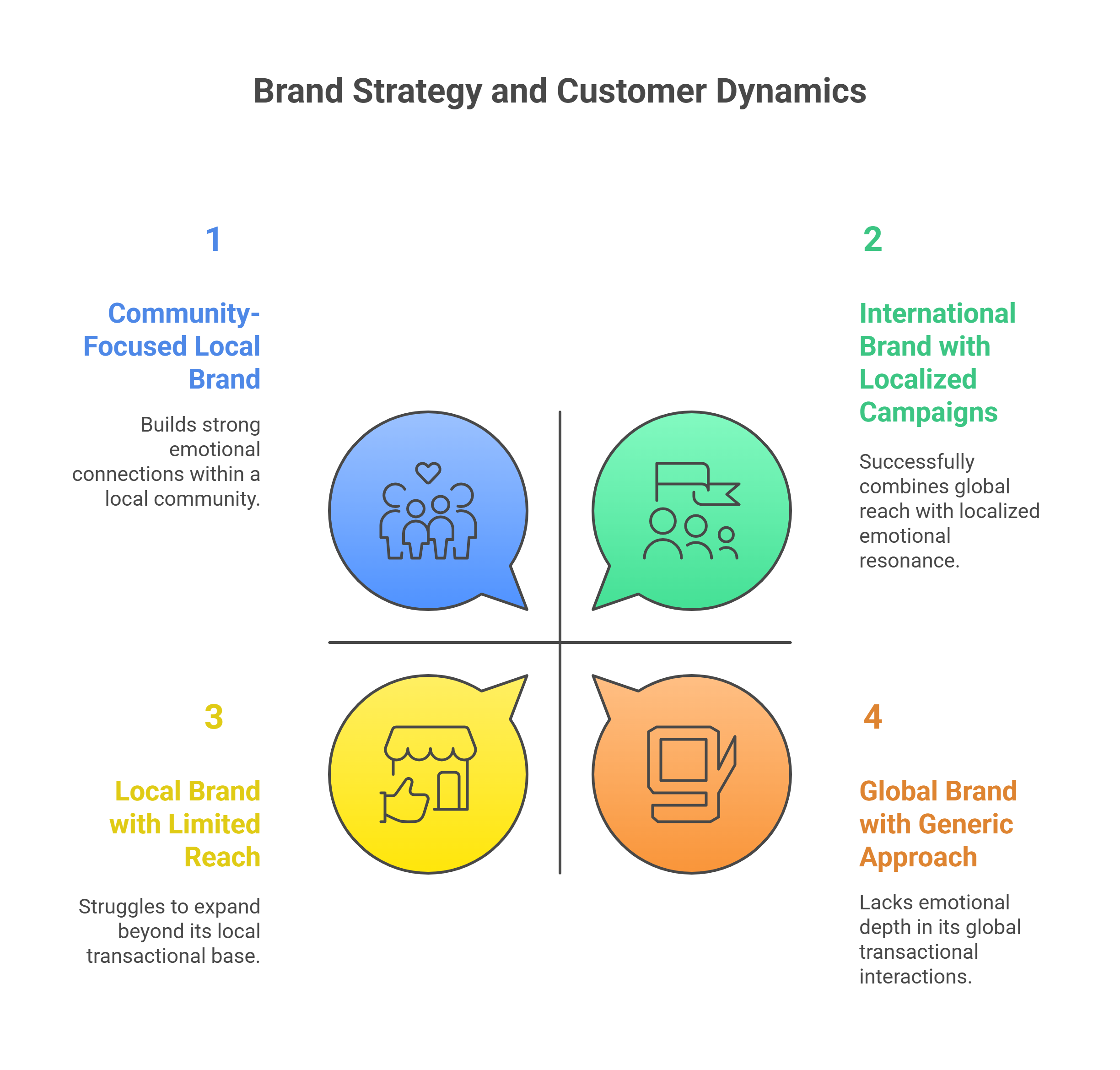
One of the most important dimensions in this debate is how your brand connects with customers. Going global increases reach, but local domination increases customer resonance—which often leads to better retention and referrals.
Global Expansion: Customer Dynamics
- Broader Reach: More top-of-funnel impressions, international partnerships, and SEO scale.
- Less Emotional Stickiness: It’s harder to resonate deeply with varied audiences unless localized perfectly.
- Growth Through Channels: Paid ads, marketplaces, and affiliate networks dominate the funnel.
Local Domination: Customer Dynamics
- Community Loyalty: You’re “the brand” everyone knows and trusts in a small circle.
- Higher NPS: Deeper engagement, events, and referrals lead to strong customer advocacy.
- Brand-as-a-Personality: In local markets, brands feel more like people—human, relational, trustworthy.
In 2030, customer experience drives long-term value. Startups that treat users like global traffic data risk becoming transactional. Startups that treat users like neighbors often create a tribe, not just a user base.
5. Investor Preferences and Valuation Impacts

Your growth strategy affects how investors perceive your startup’s risk profile, scale potential, and exit trajectory. In 2030, investors are more data-driven than ever—but many still hold biases about global vs local focus.
Global Expansion: Investor Lens
- Valuation Premiums: VCs may apply higher revenue multiples to global startups (especially in SaaS and AI sectors).
- High Risk, High Reward: Investors expect longer timelines, but also bigger exits.
- Requires Strong Team & Infrastructure: Investors will dig into logistics, legal, and local compliance readiness.
Local Domination: Investor Lens
- Faster Path to Profitability: Some investors love lean, cash-efficient startups dominating a niche.
- Clear Exit Opportunities: Acquisitions by local incumbents are common.
- May Need a Narrative Shift: Founders must articulate how local success can translate into eventual multi-market growth.
Founders must tailor their pitch to their growth path. For global startups, emphasize scale readiness. For local startups, emphasize retention, community, and profitability. Both can raise capital—but the narrative must be crisp.

Join the Founder MBA 2030: Build Fast. Scale Smart.

Choosing between global expansion and local domination is one of the most critical strategic decisions a founder can make. But you don’t have to make it alone—or without the right playbooks.
The Founder MBA 2030 is built for modern entrepreneurs navigating real-world decisions in high-stakes, fast-growth environments. You’ll learn:
- How to evaluate and execute both global and local strategies
- How to use data to drive expansion decisions
- How to build customer loyalty and revenue growth—whichever path you choose
- How to use AI and automation to simplify global operations
Plus, you’ll join a network of founders, mentors, and investors who’ve scaled startups across continents and communities.
Enroll today and master the frameworks, tools, and strategies that make startups unstoppable—globally or locally.
Frequently Asked Questions
1. Is it better to go global early or focus locally first in 2030?
There’s no universal answer. If you have infrastructure and product-market fit, global can work early. Otherwise, dominate locally to build a solid foundation.
2. Can a local-first startup later go global?
Absolutely. Many unicorns began locally and expanded after nailing their core model. Local domination often provides valuable proof points and traction.
3. Are investors in 2030 more biased toward global startups?
Some are, especially in SaaS, AI, or platform plays. But others value profitability, customer loyalty, and market leadership—even if it’s regional.
4. Does global expansion mean higher risk?
Yes, due to legal, operational, and market complexity. But with the right systems and timing, global growth can de-risk your revenue streams.
5. Which strategy works better for impact-driven startups?
Local domination often works better initially. It builds strong community trust—especially important in health, education, and civic tech sectors.
Written By
Critical Legal Writer Intern at BISJHINTUS, English Honours (Gold Medalist) / LL.B.

Designed By
UI/UX Designer at BISJHINTUS

Share this post:
Leave a comment
Your email address will not be published. Required fields are marked *
Write a Review
Related Posts

Learn how to raise smart capital in 2030's competitive startup landscape. Discover modern funding st...

Discover the five most powerful startup frameworks that are transforming how founders build and scal...
